Signage Standards
JHACH
Signage Standards
JHACH
Signage Standards
JHACH
Project Details
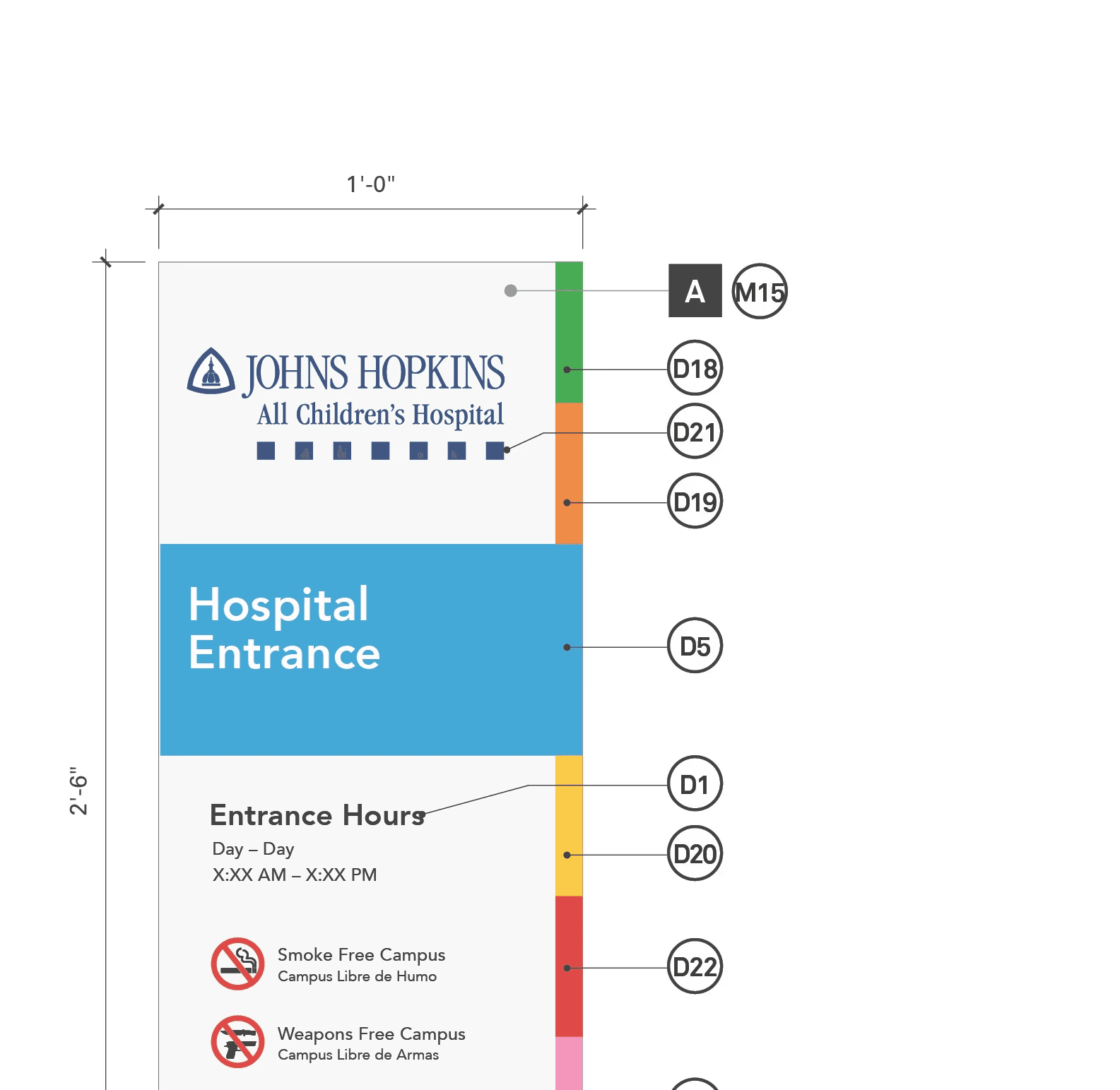
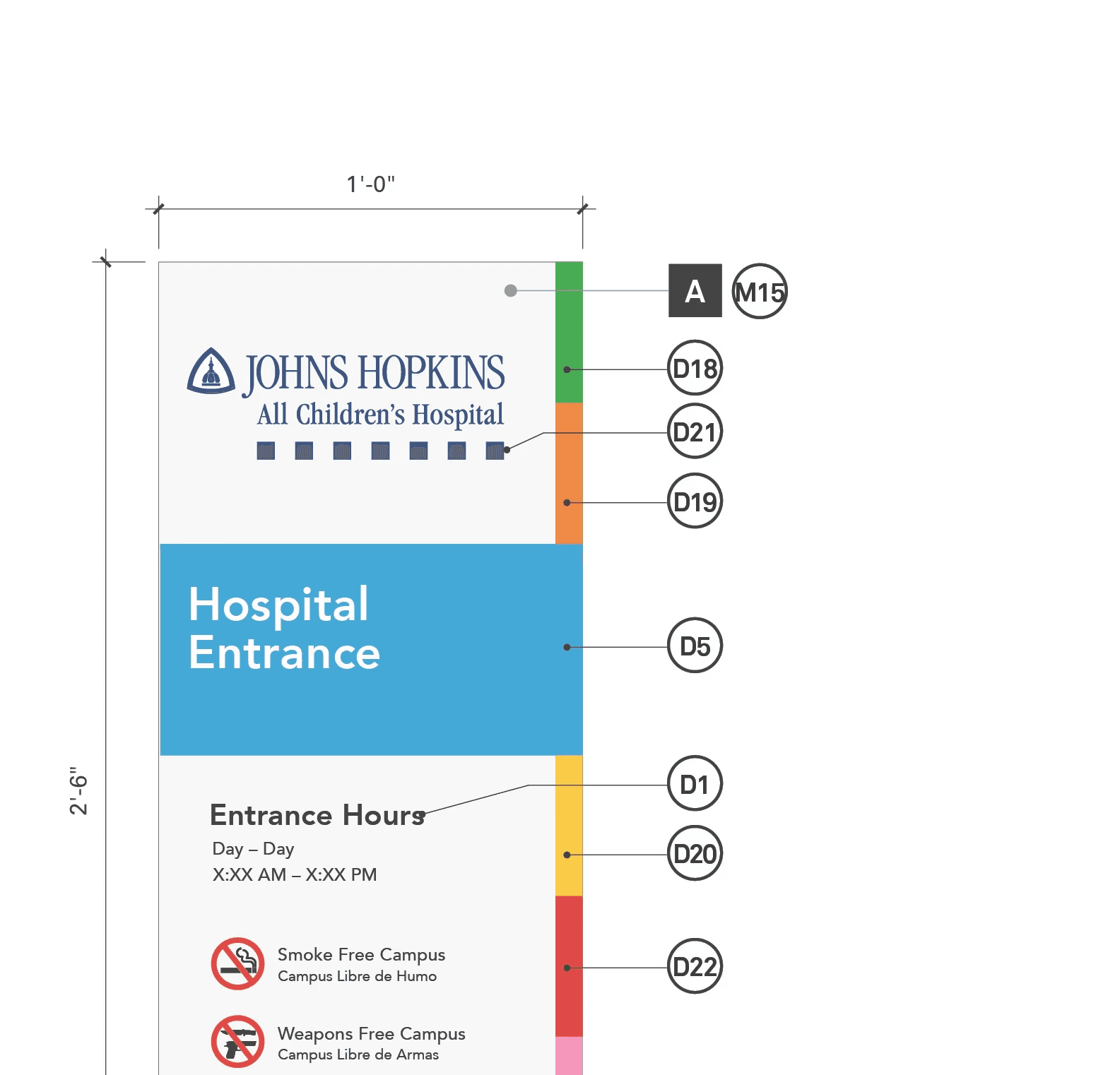
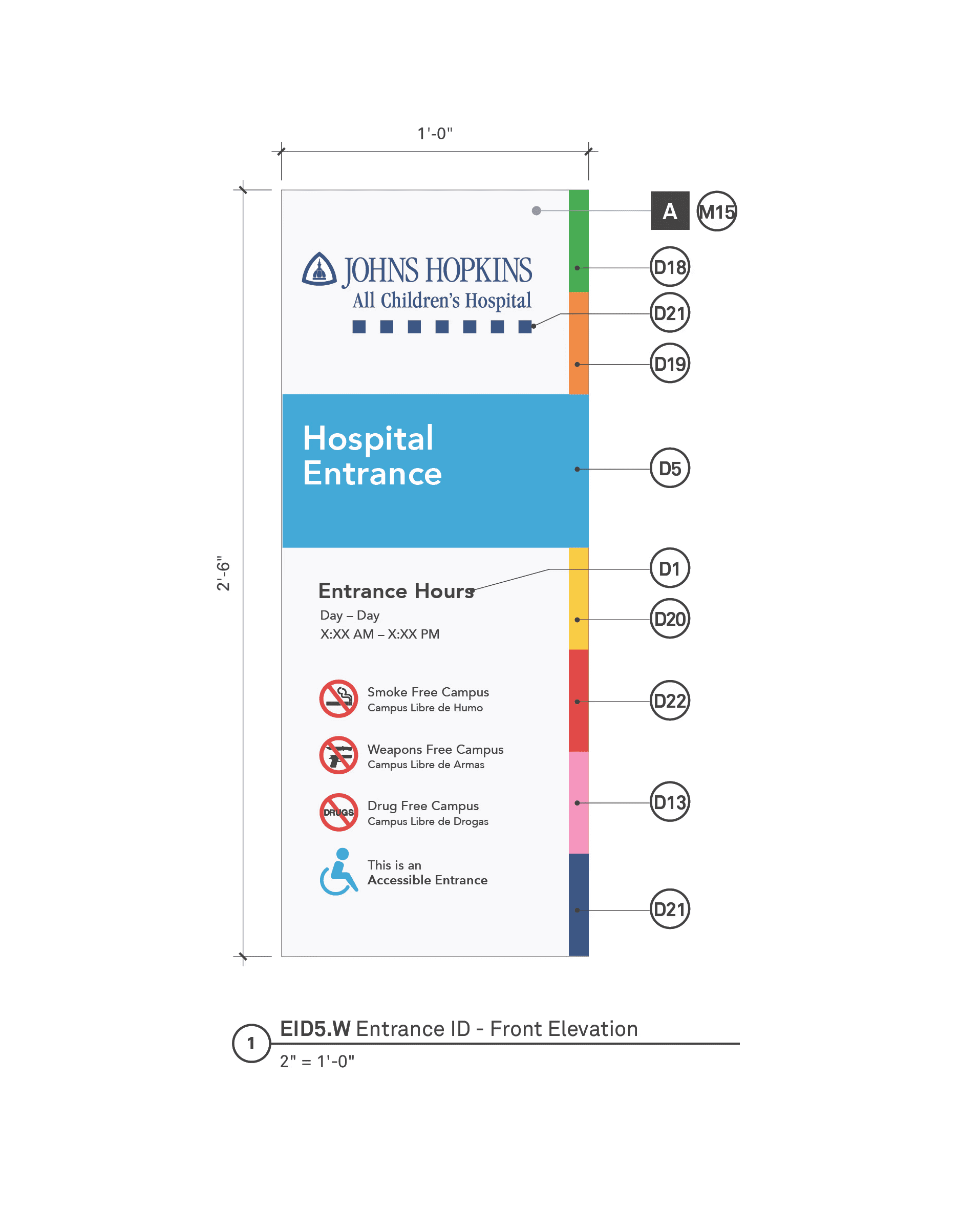
For Johns Hopkins All Children’s Hospital, I worked as an asset designer on a comprehensive signage standards manual developed at EXIT Design. The system was created to unify signage across multiple campuses and support future expansion, including new construction at Wesley Chapel. I designed an exterior entrance sign that communicates campus identity and hours of operation, applying brand guidelines while using color as a navigational tool aligned with individual building designations. The design balances clarity and visibility with a more expressive use of the established color system. Beyond individual sign design, I produced comprehensive sign menus and detailed sign drawings that define dimensions, materials, and fabrication specifications. These drawings serve as direct communication tools for fabricators, ensuring accuracy from concept to production. I also created mounting diagrams to demonstrate how signage should be arranged across different spatial conditions, allowing the system to adapt to a range of environments. To standardize the user experience at a deeper level, I developed programming diagrams for each room type, outlining exactly which sign types are required and where they should be placed. These diagrams establish a consistent logic that can be applied universally across all campuses. The resulting standards manual is an active, scalable system that guides both current implementation and future development, ensuring clarity, consistency, and ease of navigation across a growing healthcare network.
Design Agency: Exit
Role on Project: Design Co-Op
Project Details
For Johns Hopkins All Children’s Hospital, I worked as an asset designer on a comprehensive signage standards manual developed at EXIT Design. The system was created to unify signage across multiple campuses and support future expansion, including new construction at Wesley Chapel. I designed an exterior entrance sign that communicates campus identity and hours of operation, applying brand guidelines while using color as a navigational tool aligned with individual building designations. The design balances clarity and visibility with a more expressive use of the established color system. Beyond individual sign design, I produced comprehensive sign menus and detailed sign drawings that define dimensions, materials, and fabrication specifications. These drawings serve as direct communication tools for fabricators, ensuring accuracy from concept to production. I also created mounting diagrams to demonstrate how signage should be arranged across different spatial conditions, allowing the system to adapt to a range of environments. To standardize the user experience at a deeper level, I developed programming diagrams for each room type, outlining exactly which sign types are required and where they should be placed. These diagrams establish a consistent logic that can be applied universally across all campuses. The resulting standards manual is an active, scalable system that guides both current implementation and future development, ensuring clarity, consistency, and ease of navigation across a growing healthcare network.
Design Agency: Exit
Role on Project: Design Co-Op
Project Details
For Johns Hopkins All Children’s Hospital, I worked as an asset designer on a comprehensive signage standards manual developed at EXIT Design. The system was created to unify signage across multiple campuses and support future expansion, including new construction at Wesley Chapel. I designed an exterior entrance sign that communicates campus identity and hours of operation, applying brand guidelines while using color as a navigational tool aligned with individual building designations. The design balances clarity and visibility with a more expressive use of the established color system. Beyond individual sign design, I produced comprehensive sign menus and detailed sign drawings that define dimensions, materials, and fabrication specifications. These drawings serve as direct communication tools for fabricators, ensuring accuracy from concept to production. I also created mounting diagrams to demonstrate how signage should be arranged across different spatial conditions, allowing the system to adapt to a range of environments. To standardize the user experience at a deeper level, I developed programming diagrams for each room type, outlining exactly which sign types are required and where they should be placed. These diagrams establish a consistent logic that can be applied universally across all campuses. The resulting standards manual is an active, scalable system that guides both current implementation and future development, ensuring clarity, consistency, and ease of navigation across a growing healthcare network.
Design Agency: Exit
Role on Project: Design Co-Op
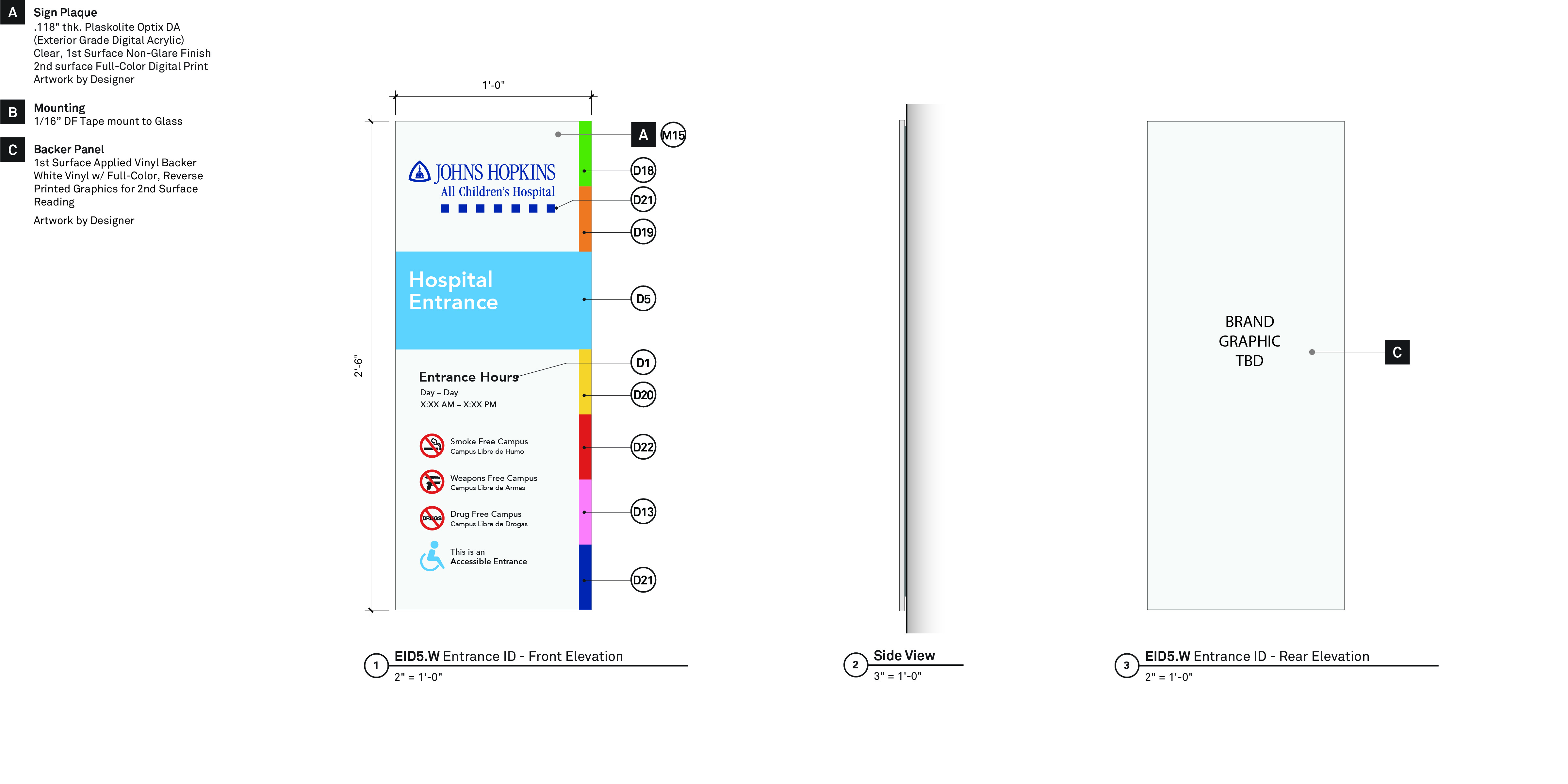
Exterior Sign Drawing
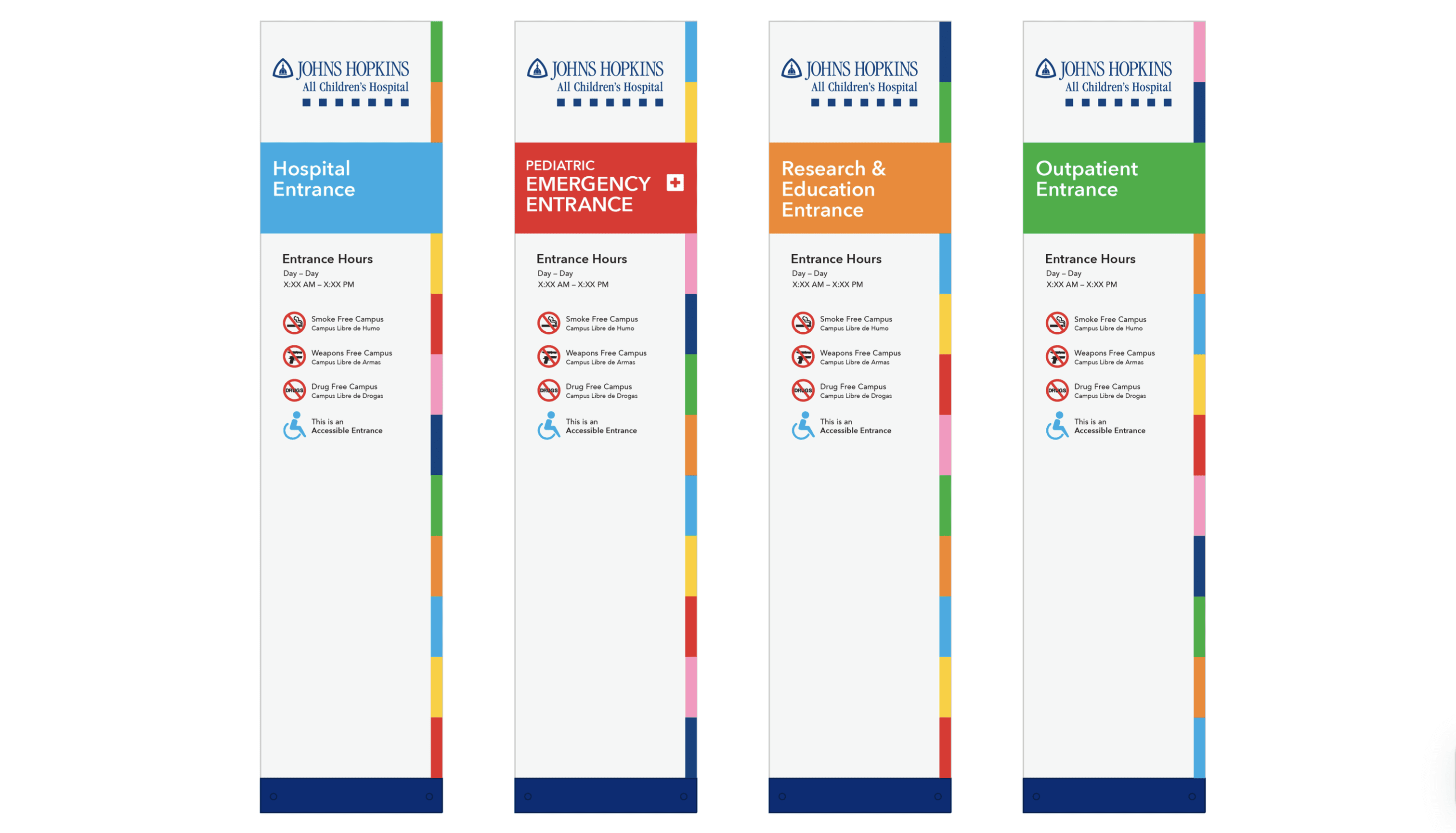
Exterior Sign Concepts
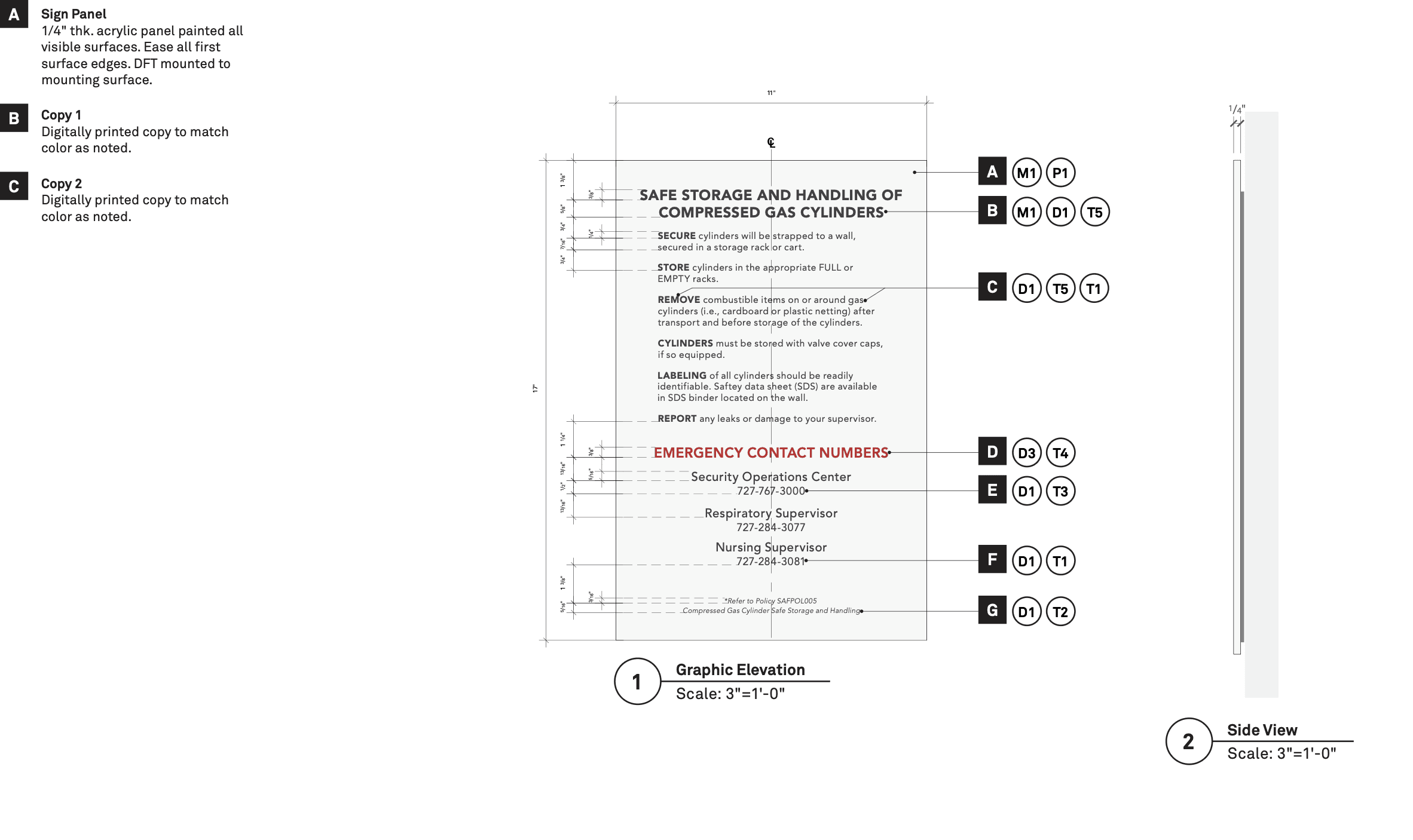
Informational Sign Drawing
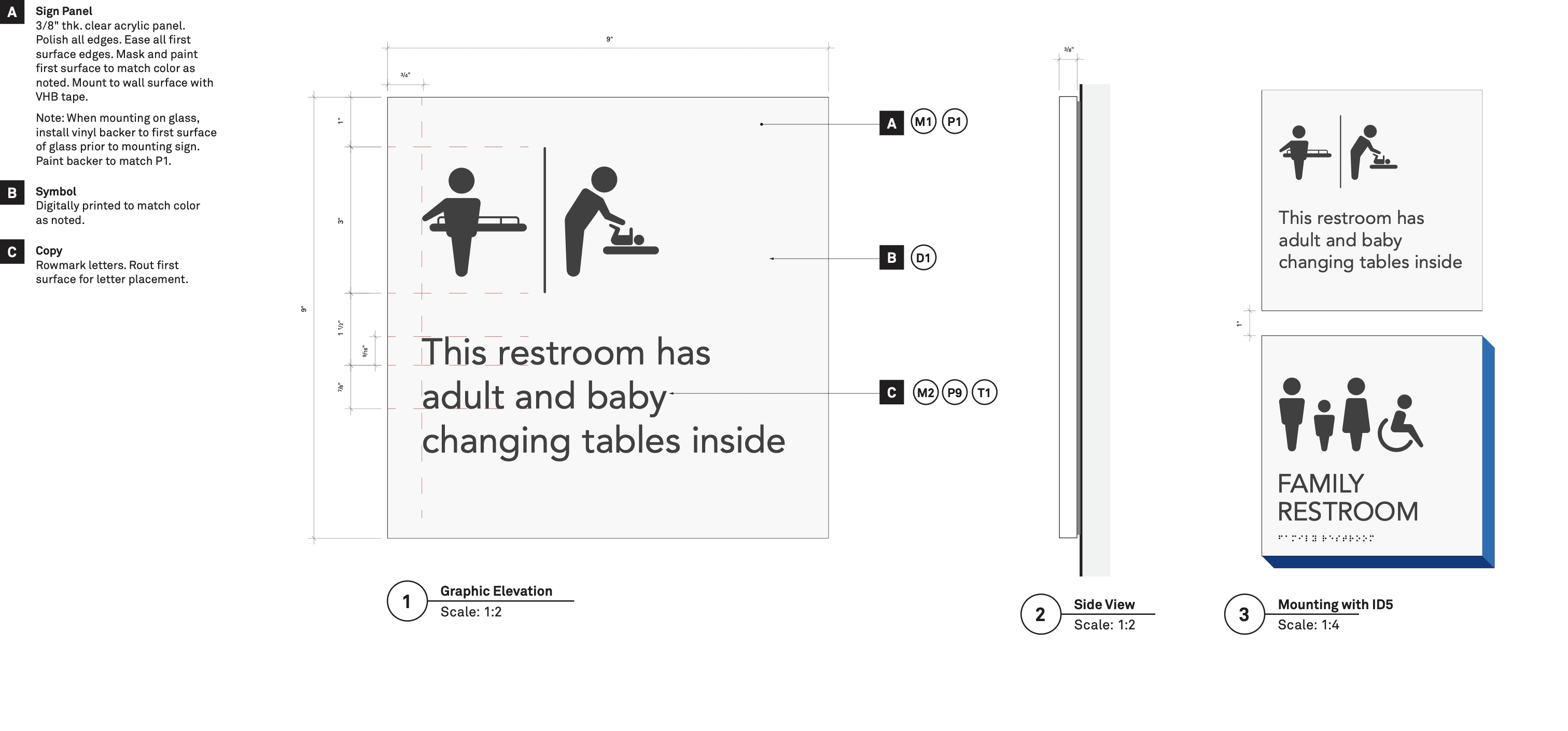
Informational Sign Drawing
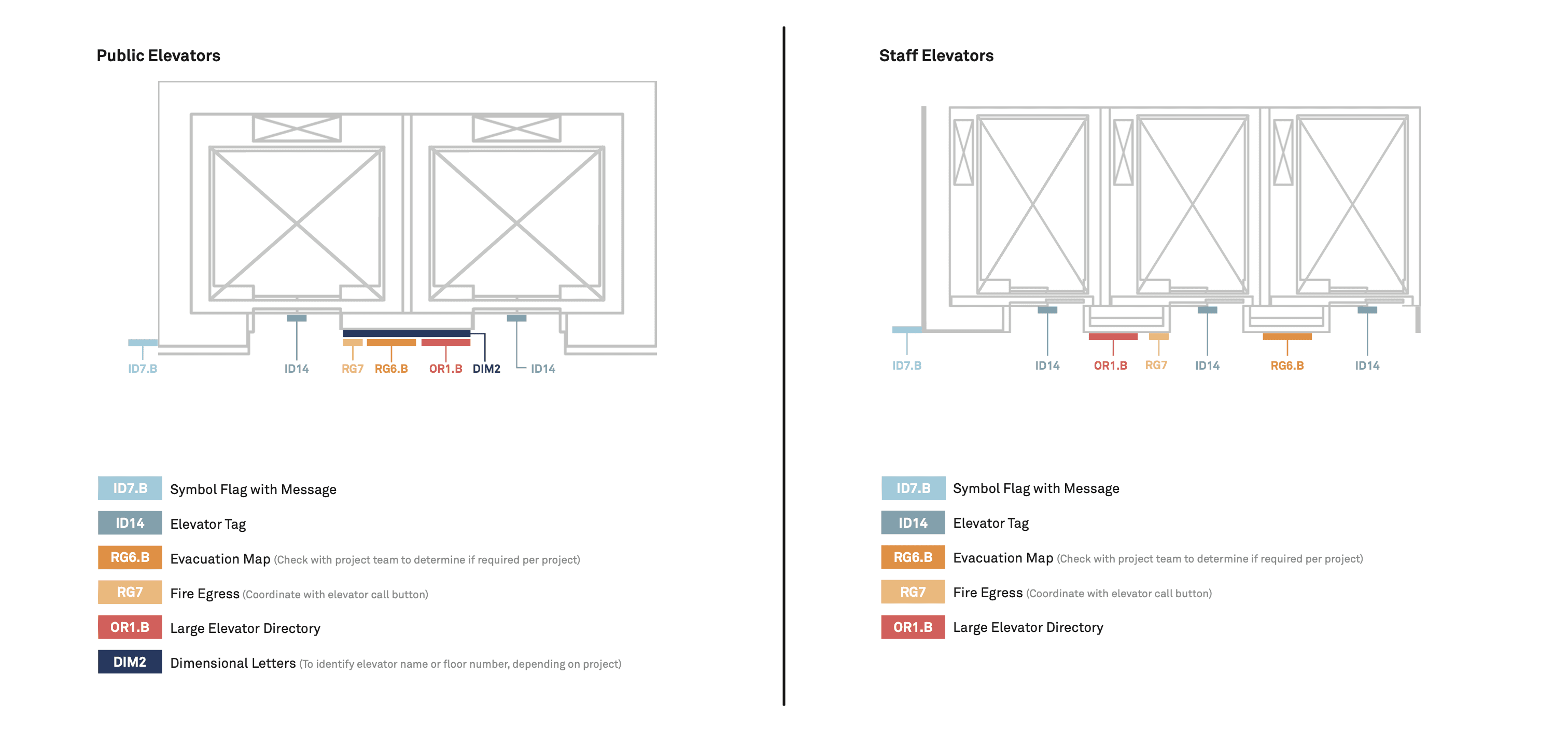
Space Diagram
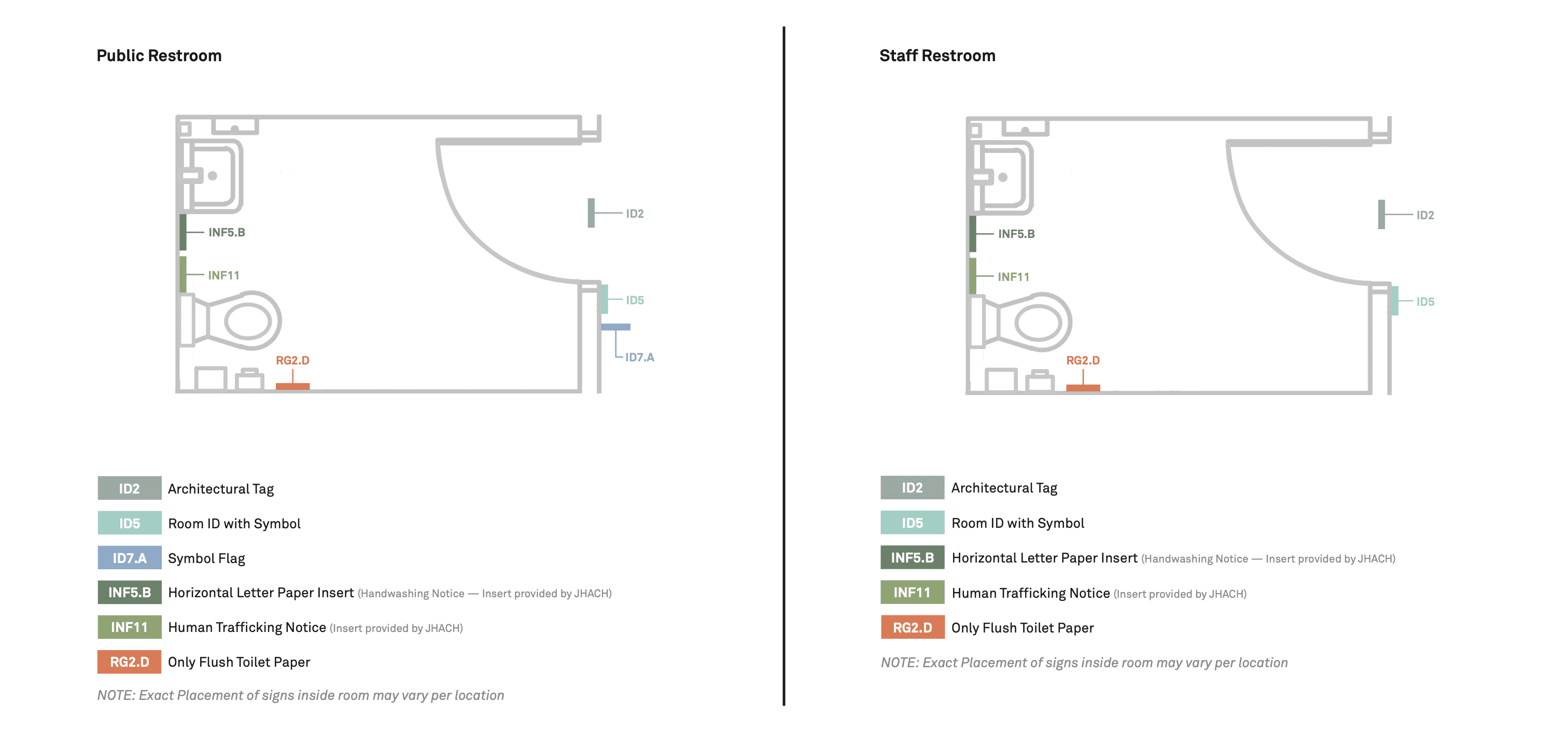
Space Diagram
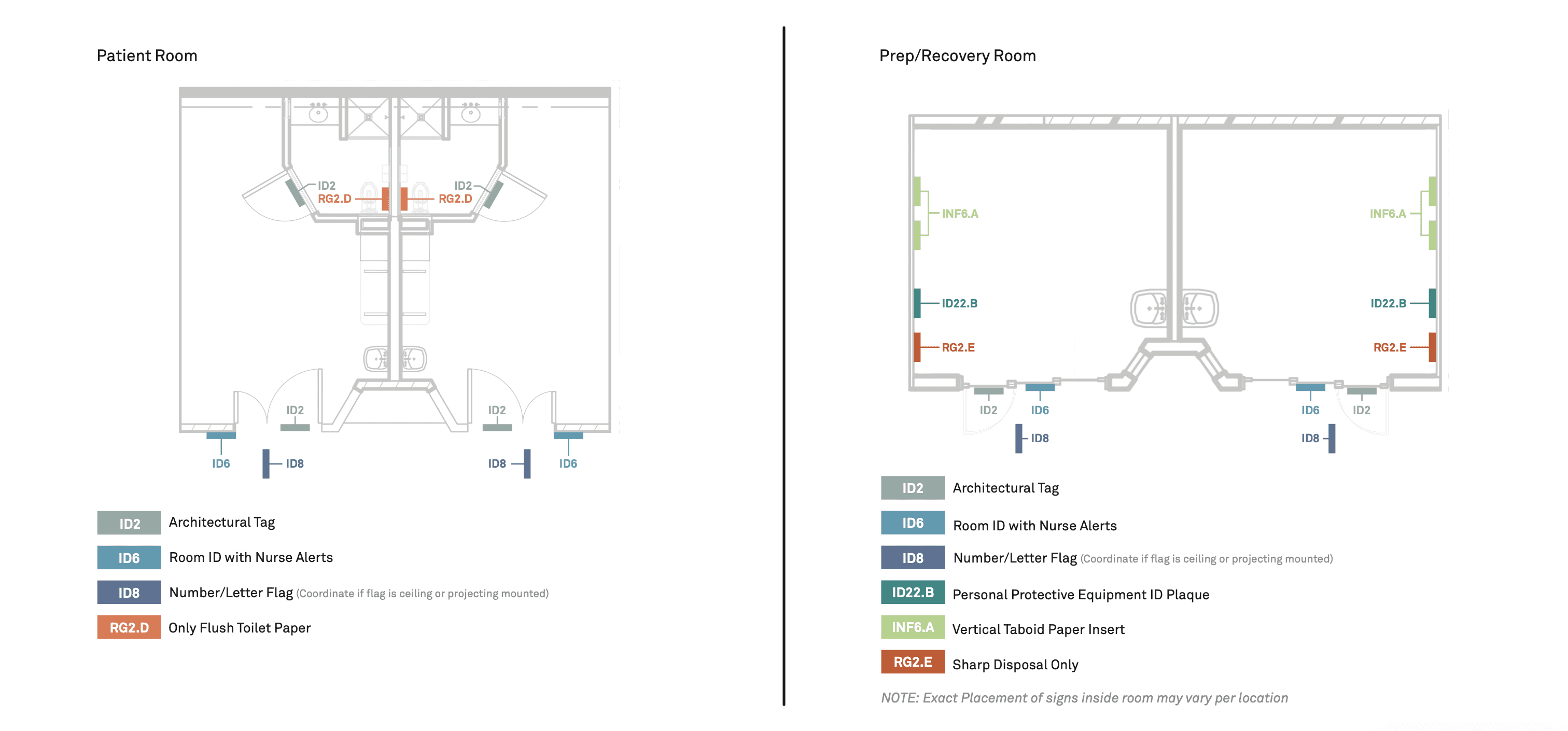
Space Diagram
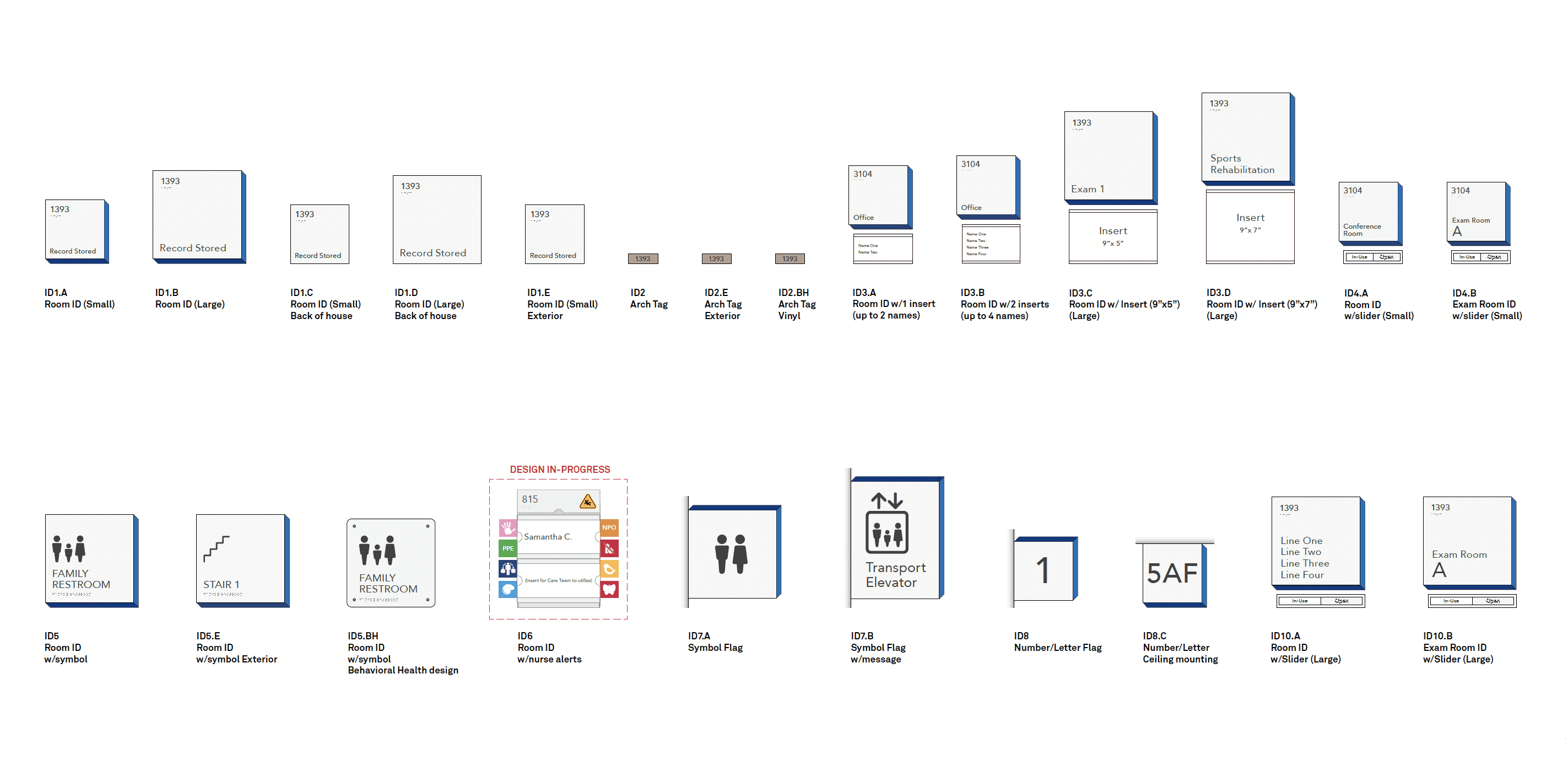
Identification Sign Overview
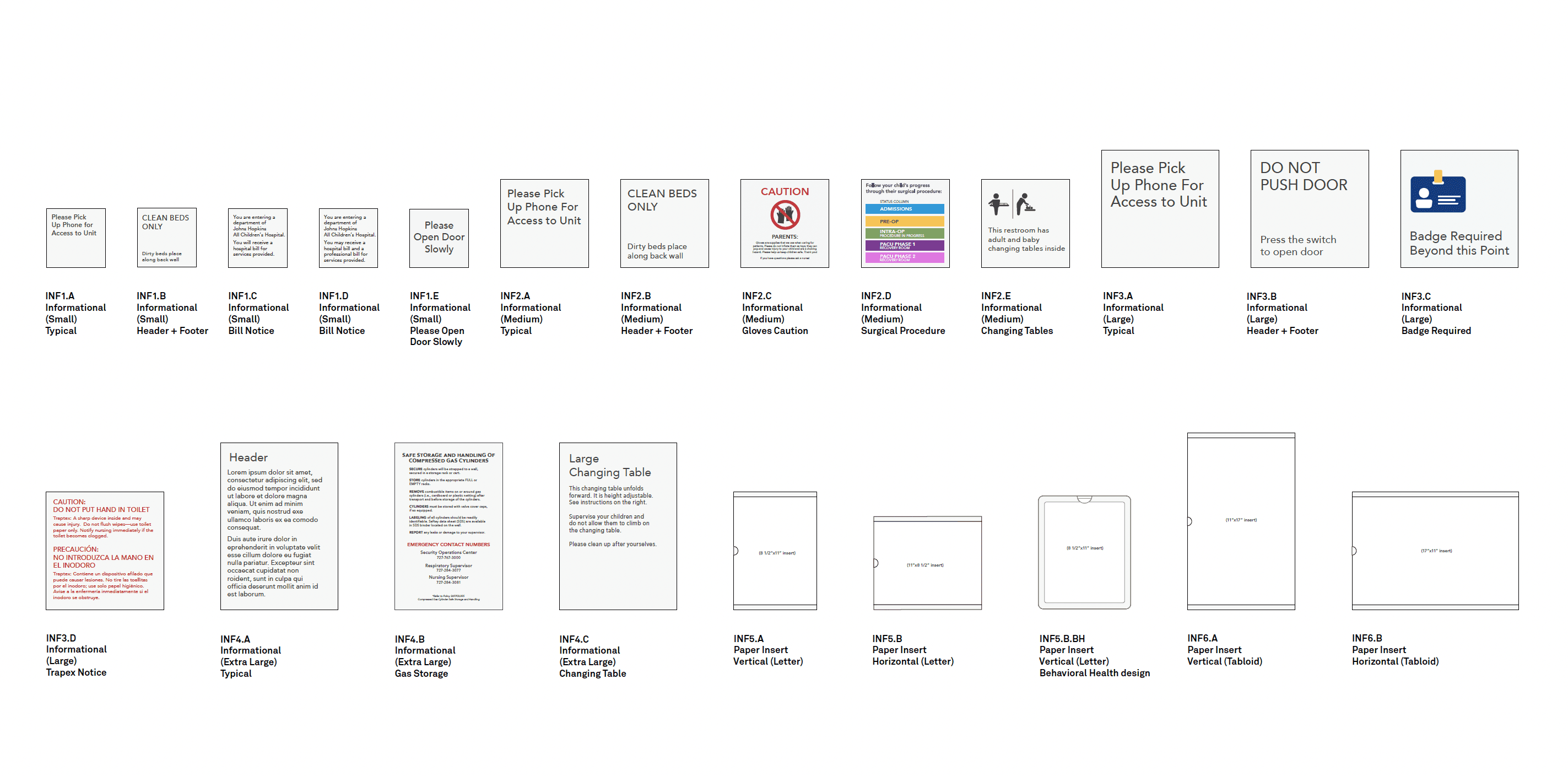
Informational Sign Overview
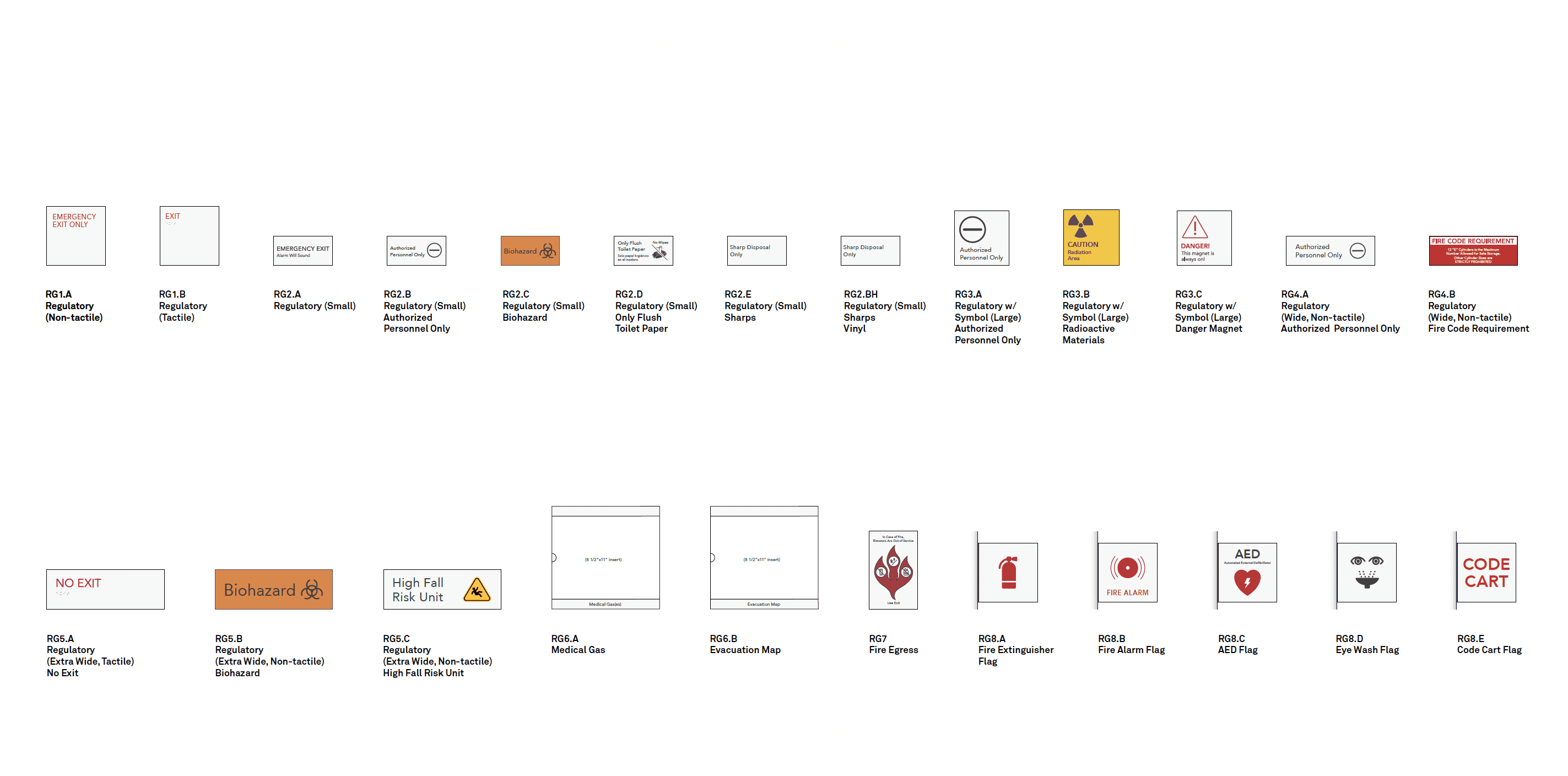
Regulatory Sign Overview
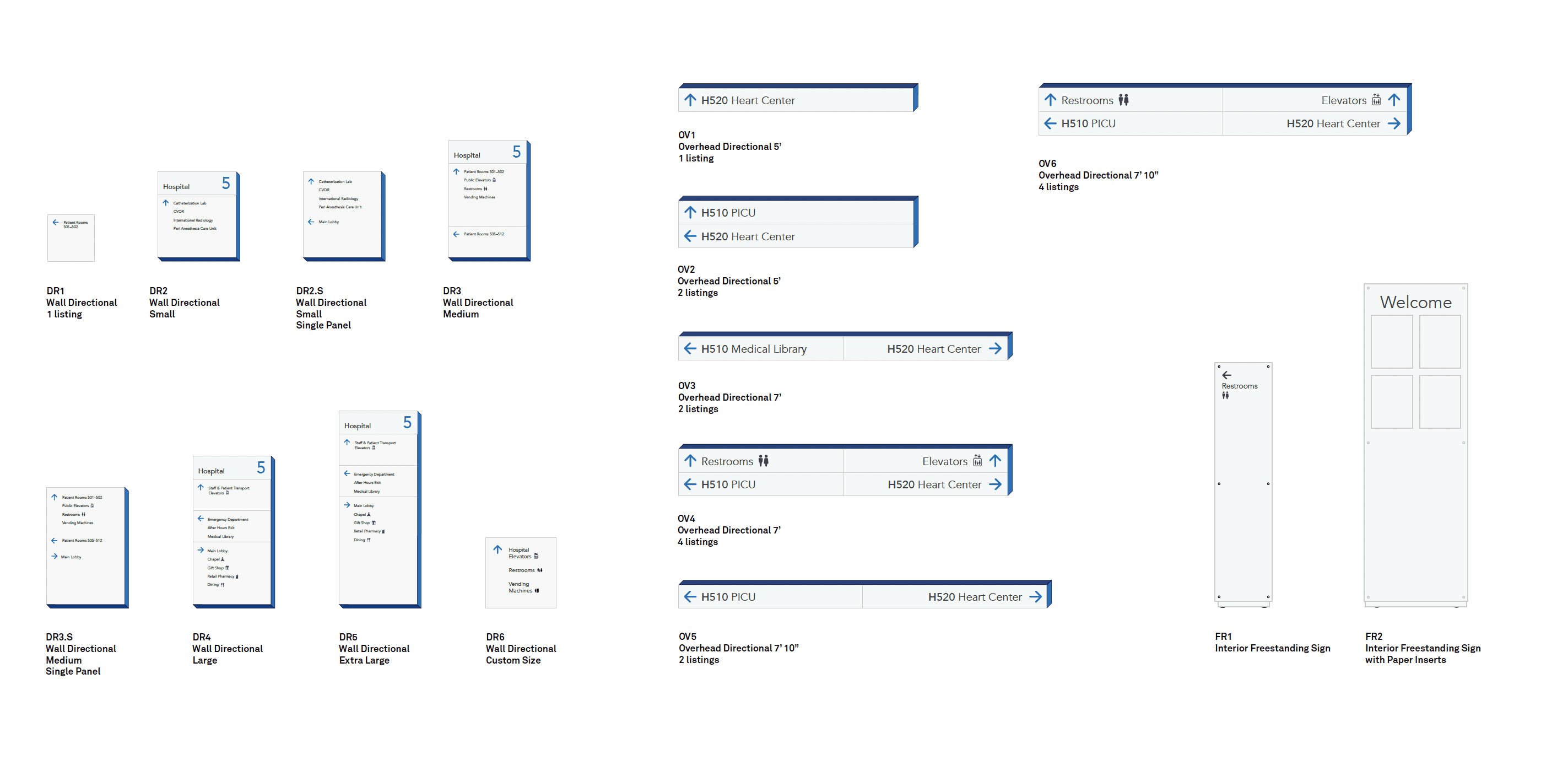
Wayfinding Sign Overview
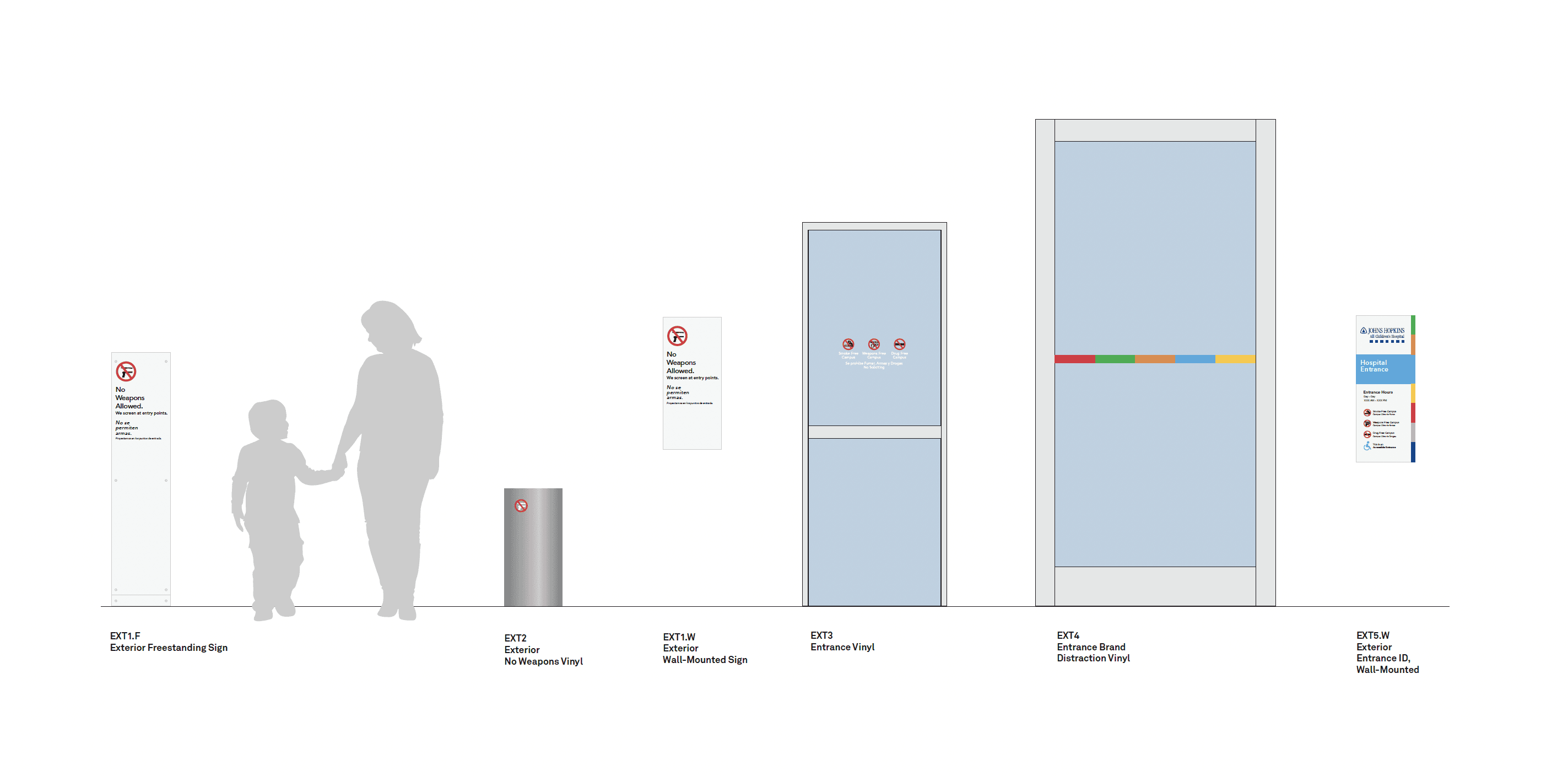
Exterior Sign Overview
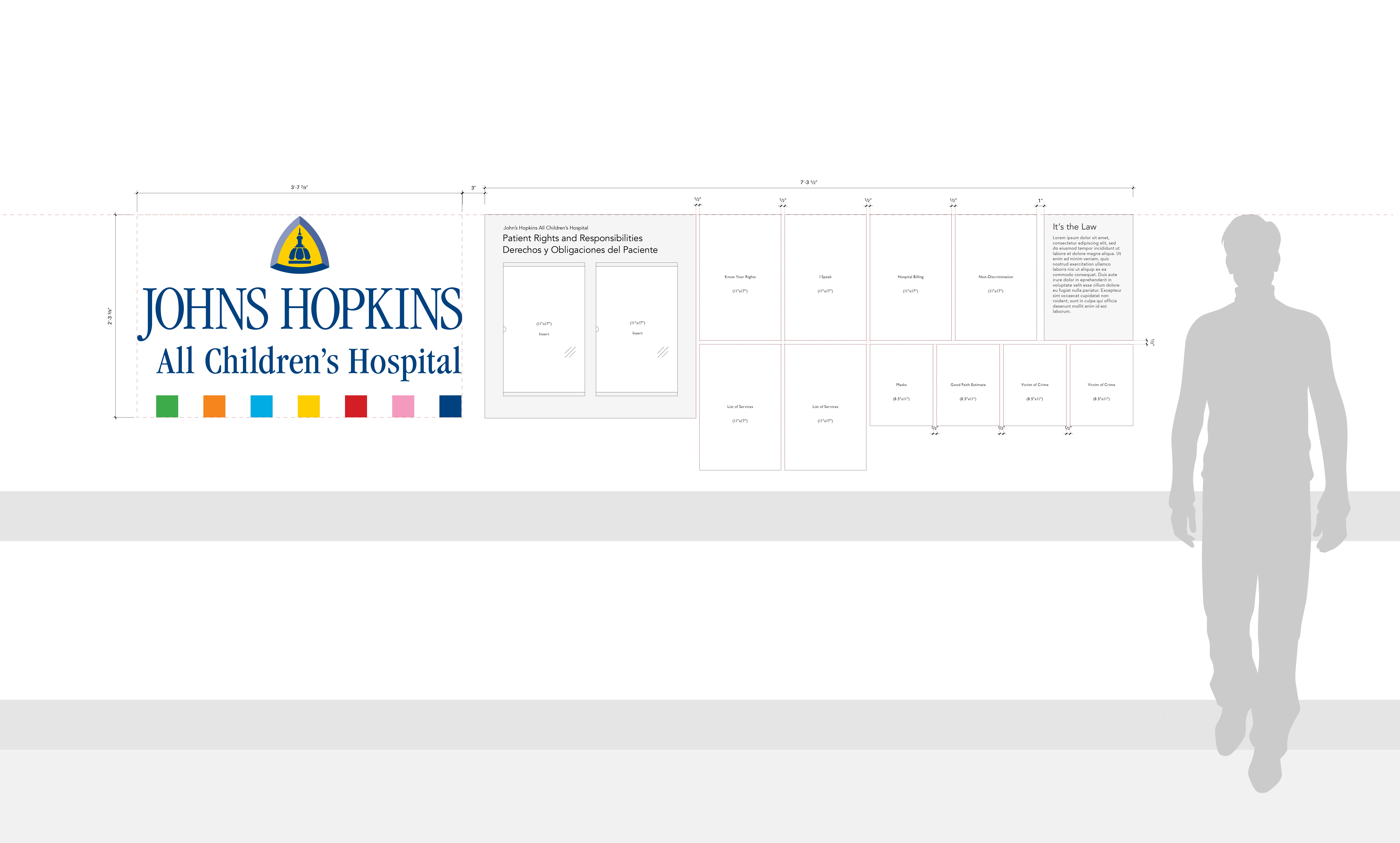
Wall Elevation
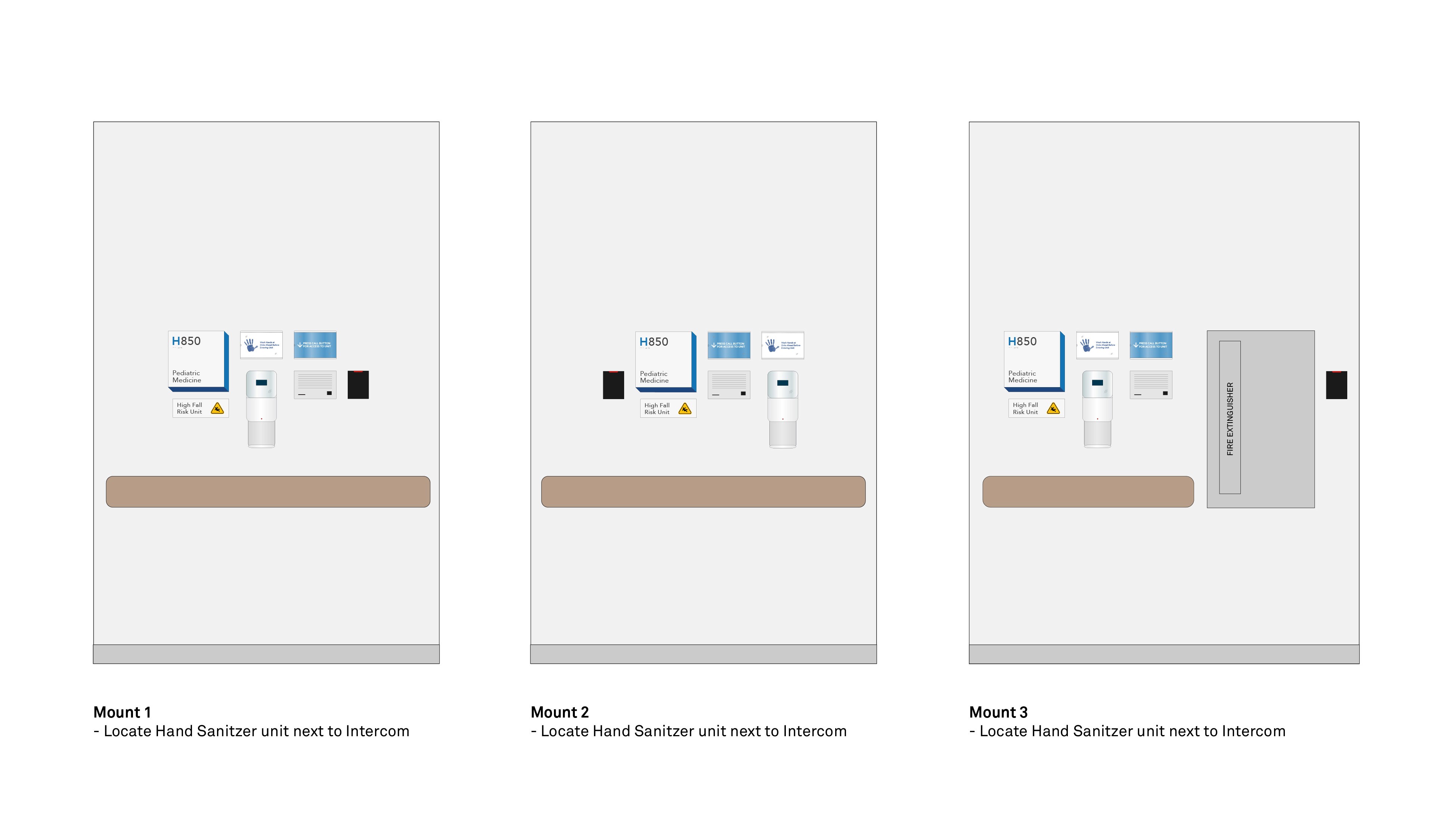
Mounting Elevation
Exterior Sign Drawing
Exterior Sign Concepts
Informational Sign Drawing
Informational Sign Drawing
Space Diagram
Space Diagram
Space Diagram
Identification Sign Overview
Informational Sign Overview
Regulatory Sign Overview
Wayfinding Sign Overview
Exterior Sign Overview
Wall Elevation
Mounting Elevation
Exterior Sign Drawing
Exterior Sign Concepts
Informational Sign Drawing
Informational Sign Drawing
Space Diagram
Space Diagram
Space Diagram
Identification Sign Overview
Informational Sign Overview
Regulatory Sign Overview
Wayfinding Sign Overview
Exterior Sign Overview
Wall Elevation
Mounting Elevation
Process
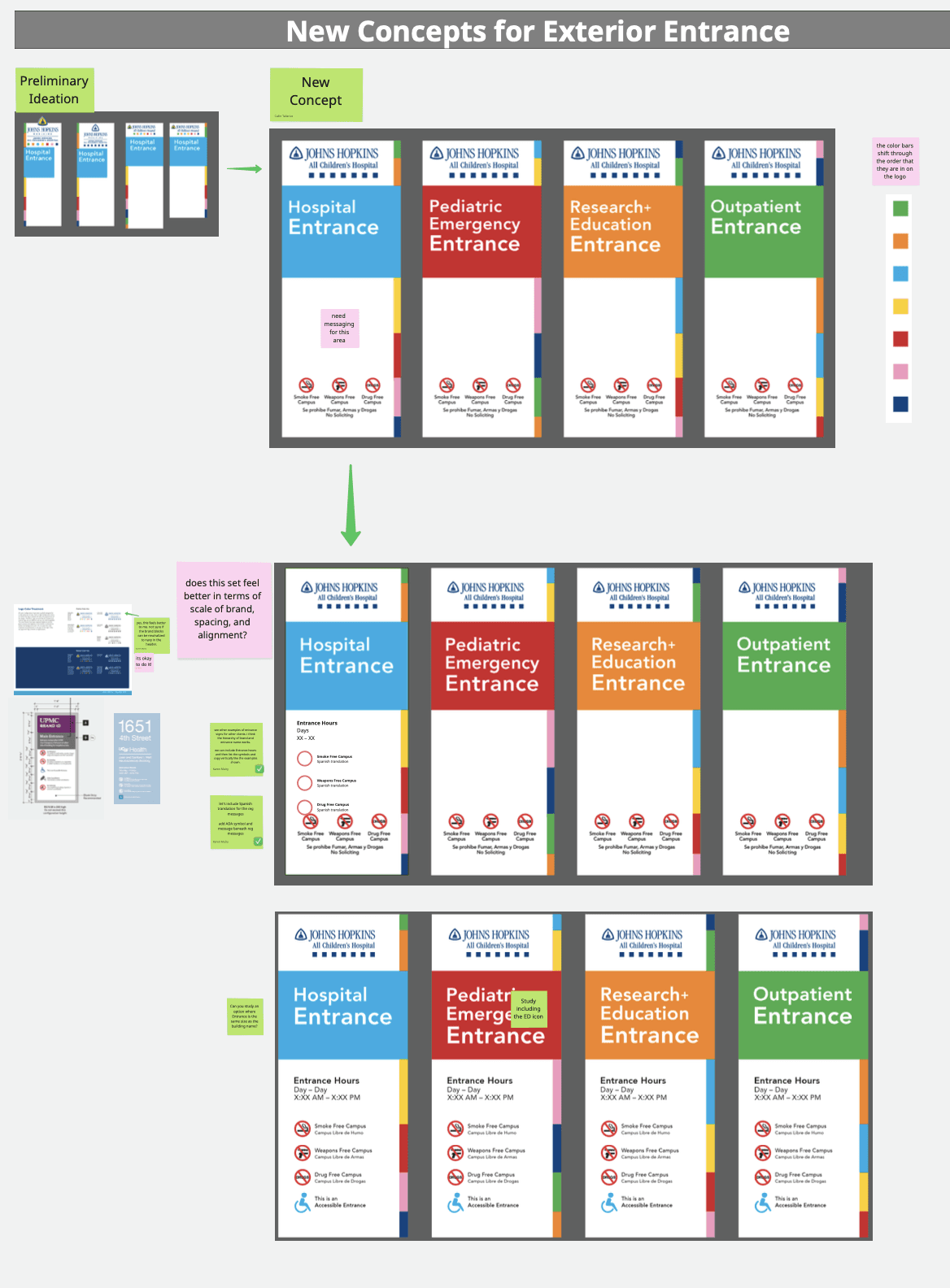
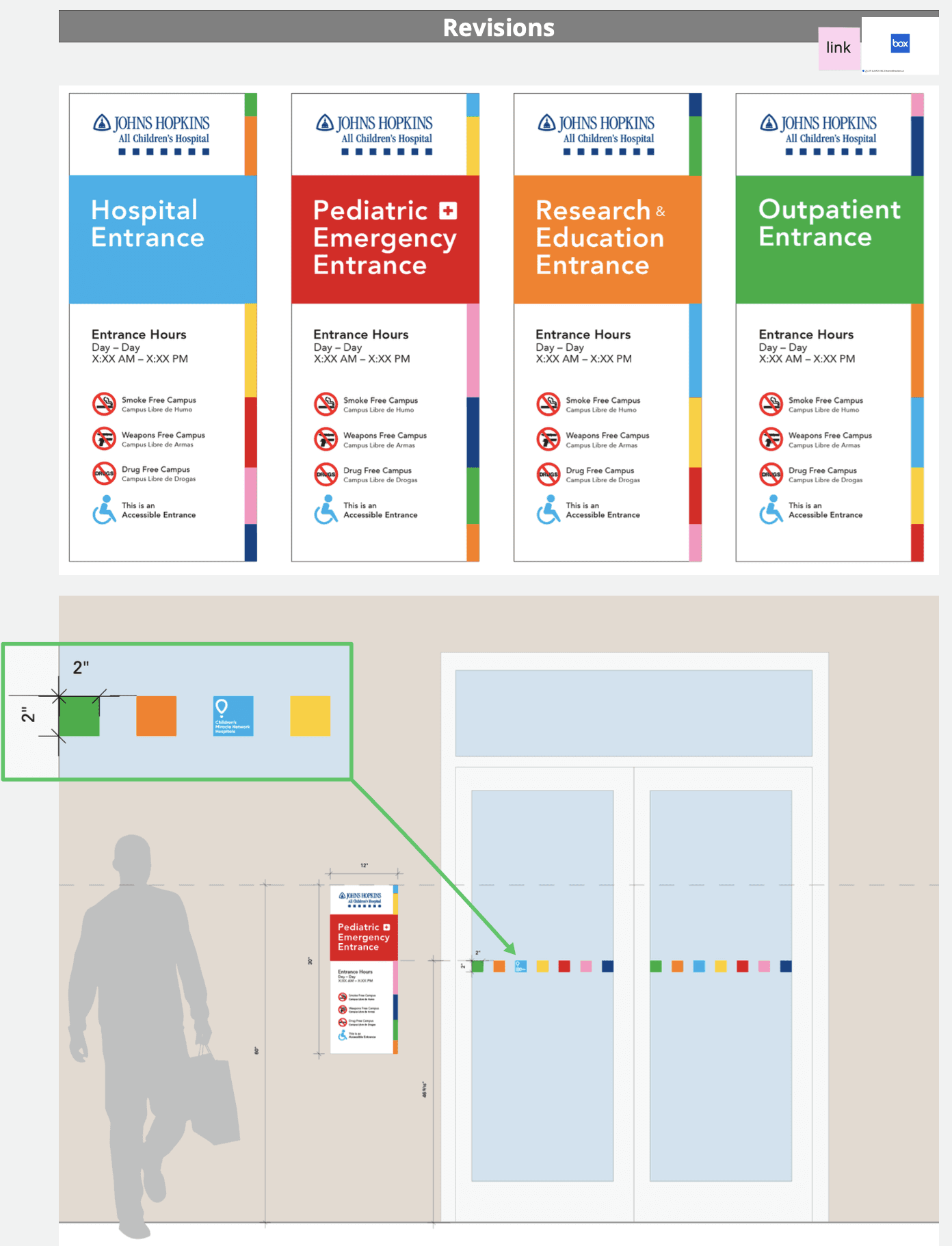
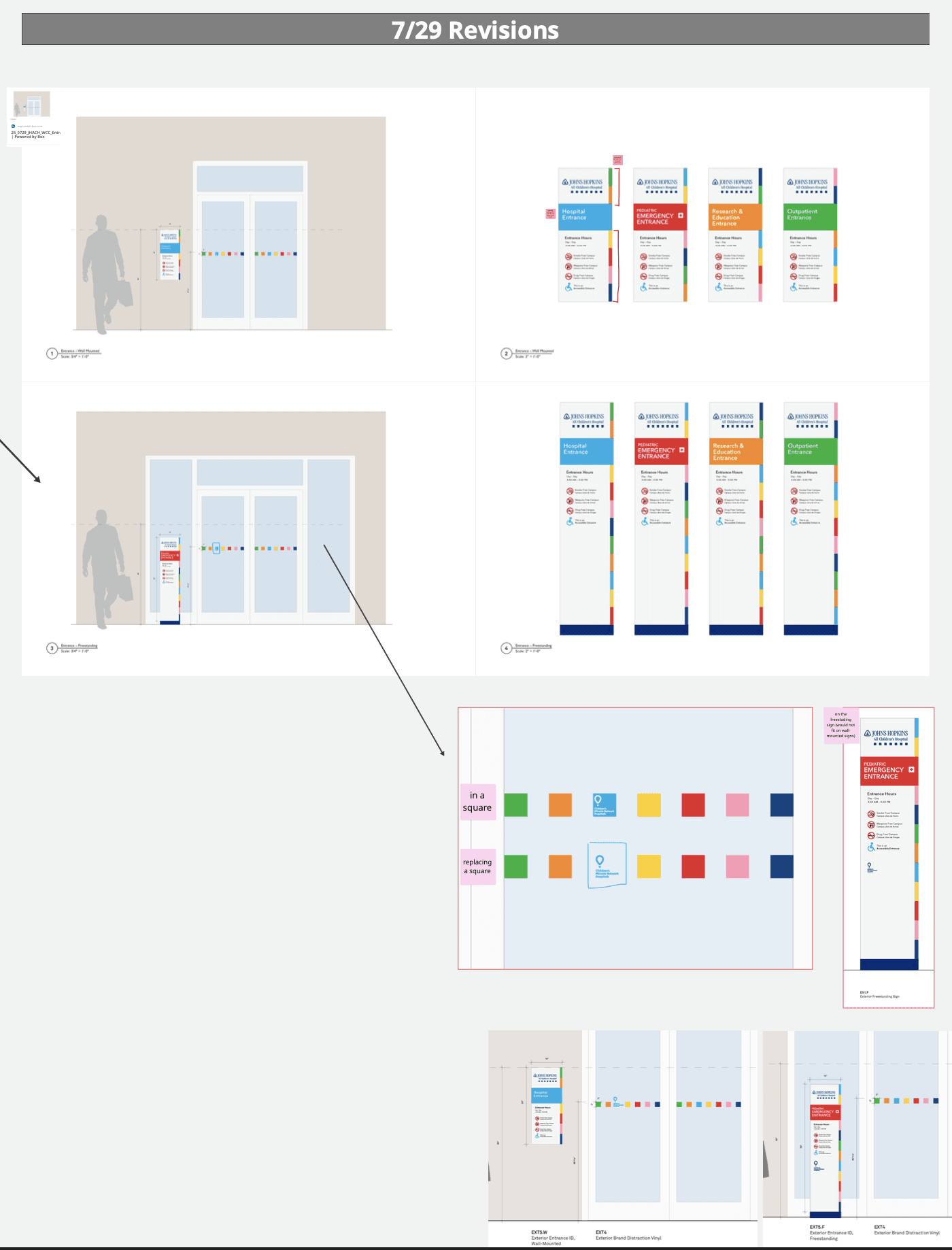
The exterior entrance sign went through multiple rounds of refinement focused on hierarchy, visibility, and adaptability across different campus conditions. Early explorations tested how the JHACH color system could move beyond static branding and function as a navigational device tied to individual building identities. Throughout the process, I iterated on layout structure, color distribution, and information density to ensure the sign remained highly legible while still feeling visually integrated with the broader system. I also explored how architectural conditions, sightlines, and mounting scenarios would affect the sign in real environments, leading to the development of application mockups, fabrication drawings, and placement studies.
Process
The exterior entrance sign went through multiple rounds of refinement focused on hierarchy, visibility, and adaptability across different campus conditions. Early explorations tested how the JHACH color system could move beyond static branding and function as a navigational device tied to individual building identities. Throughout the process, I iterated on layout structure, color distribution, and information density to ensure the sign remained highly legible while still feeling visually integrated with the broader system. I also explored how architectural conditions, sightlines, and mounting scenarios would affect the sign in real environments, leading to the development of application mockups, fabrication drawings, and placement studies.
Process
The exterior entrance sign went through multiple rounds of refinement focused on hierarchy, visibility, and adaptability across different campus conditions. Early explorations tested how the JHACH color system could move beyond static branding and function as a navigational device tied to individual building identities. Throughout the process, I iterated on layout structure, color distribution, and information density to ensure the sign remained highly legible while still feeling visually integrated with the broader system. I also explored how architectural conditions, sightlines, and mounting scenarios would affect the sign in real environments, leading to the development of application mockups, fabrication drawings, and placement studies.