Book Design
Understanding Media
Book Design
Understanding Media
Book Design
Understanding Media
Project Details
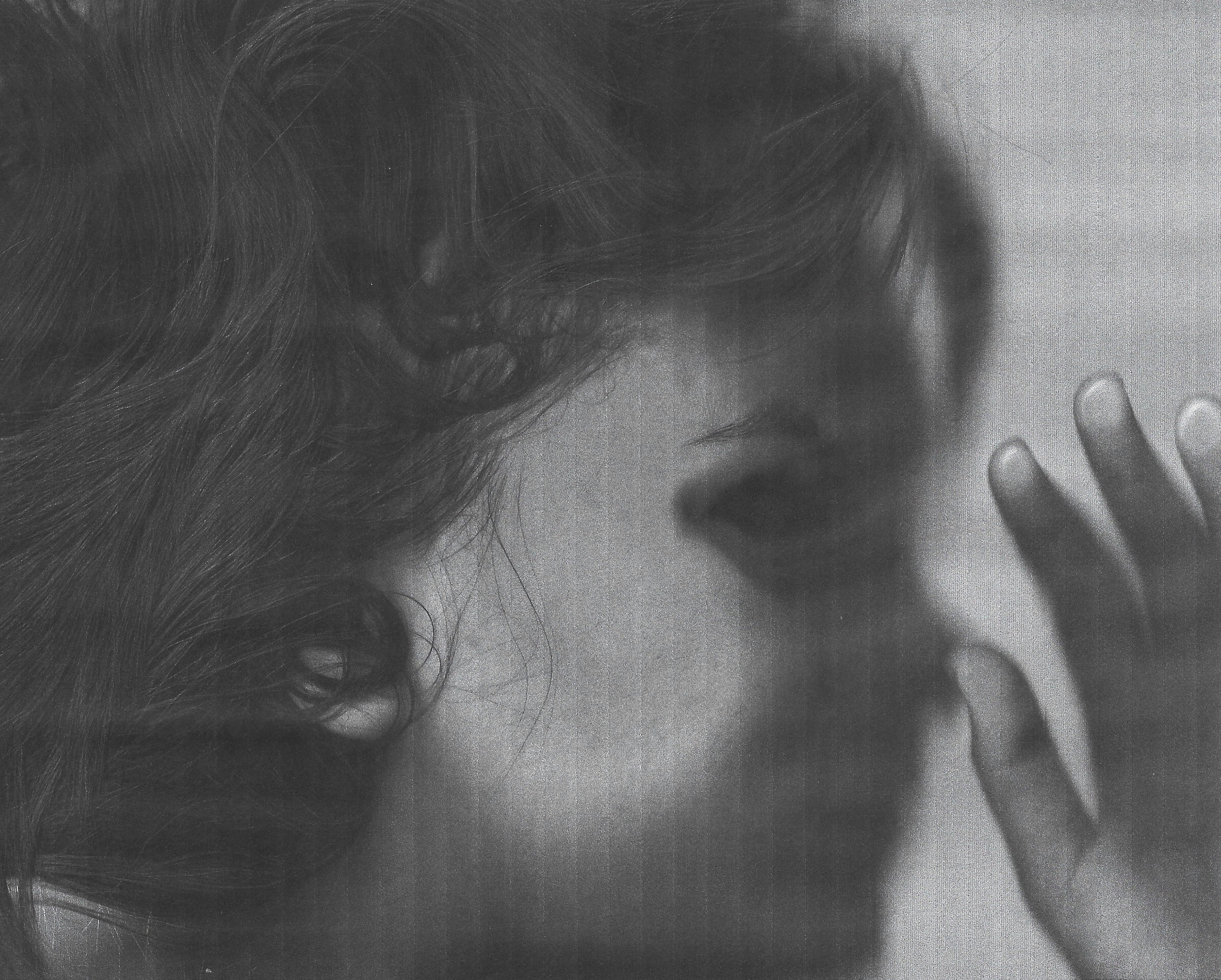
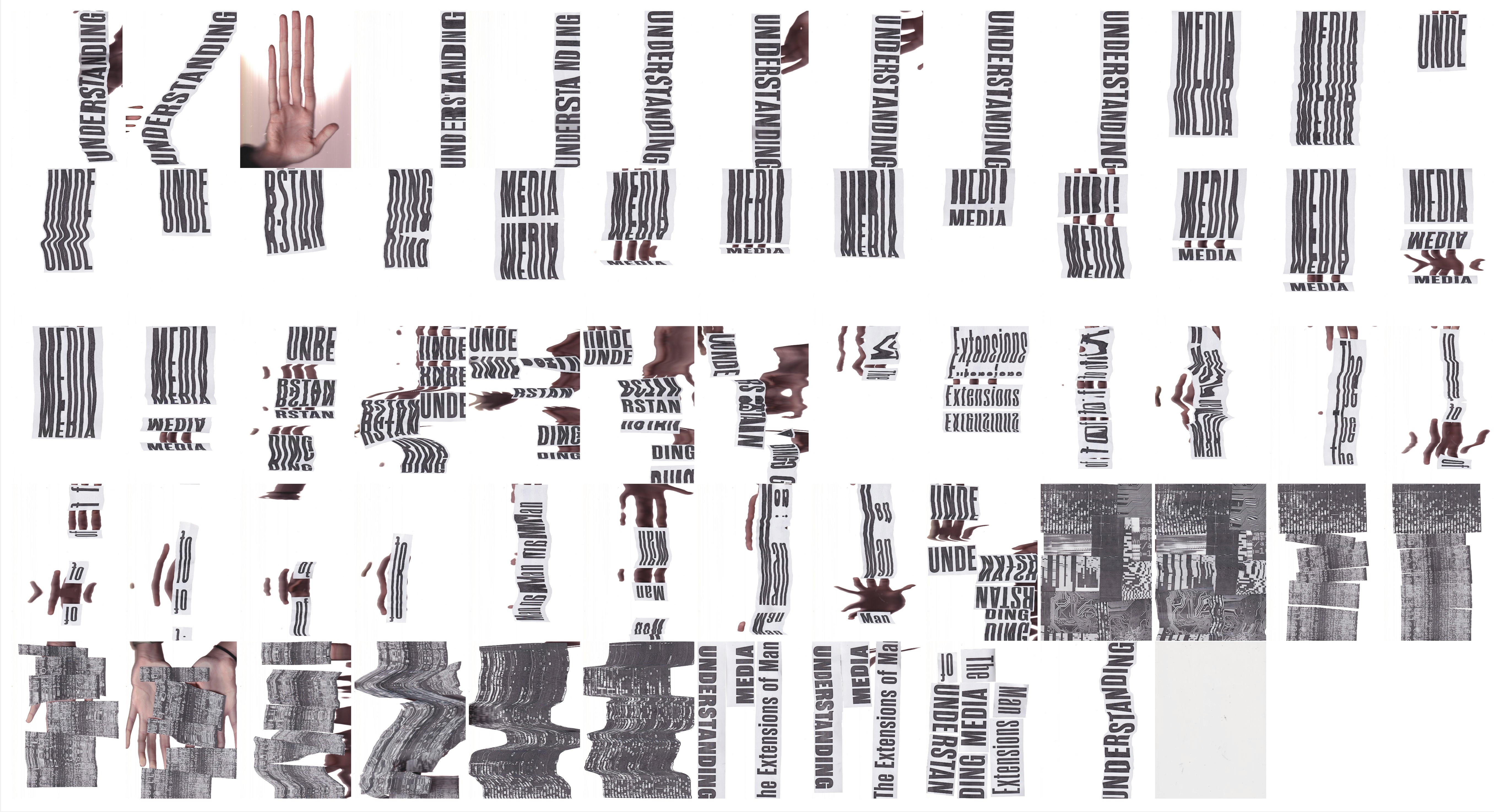
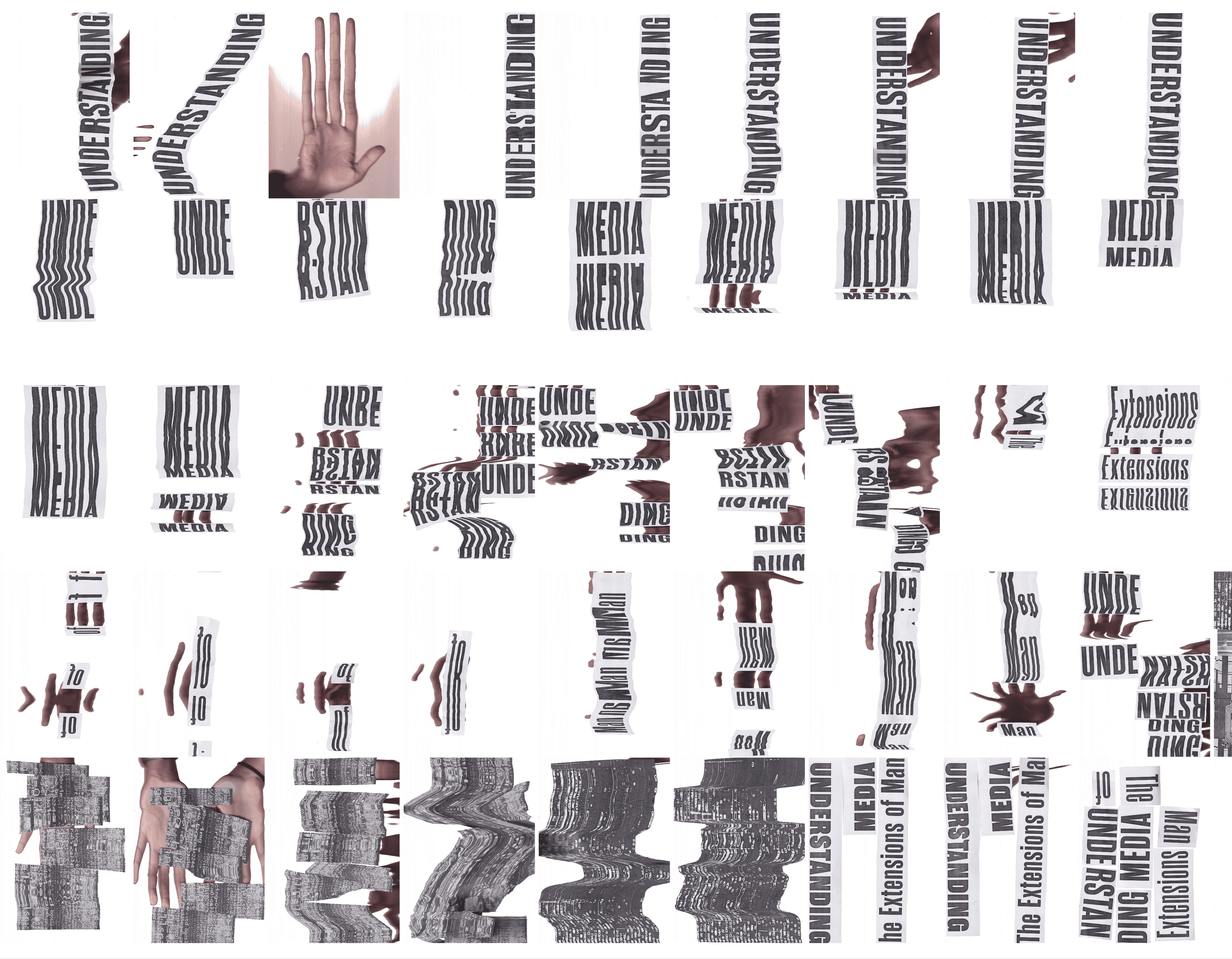
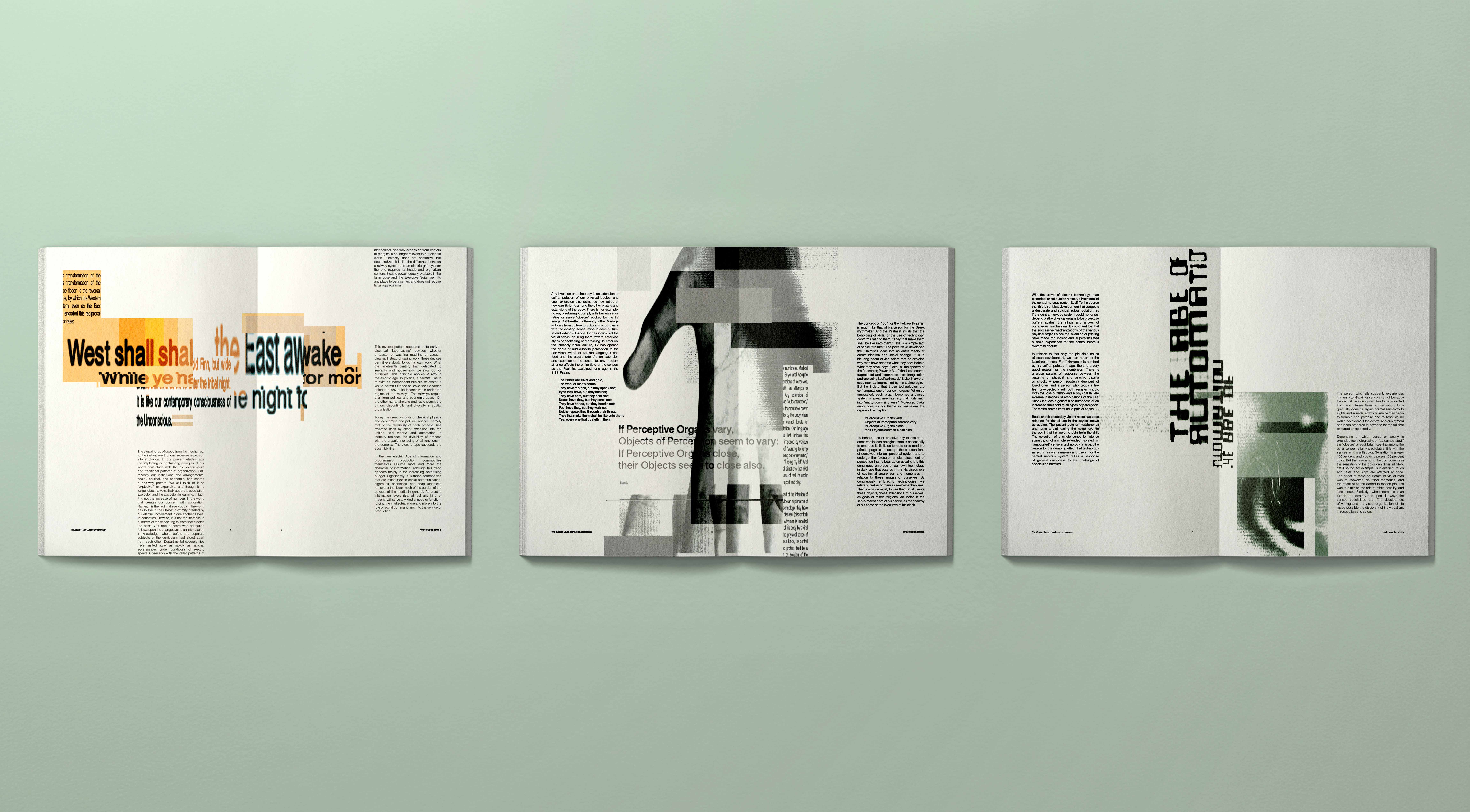
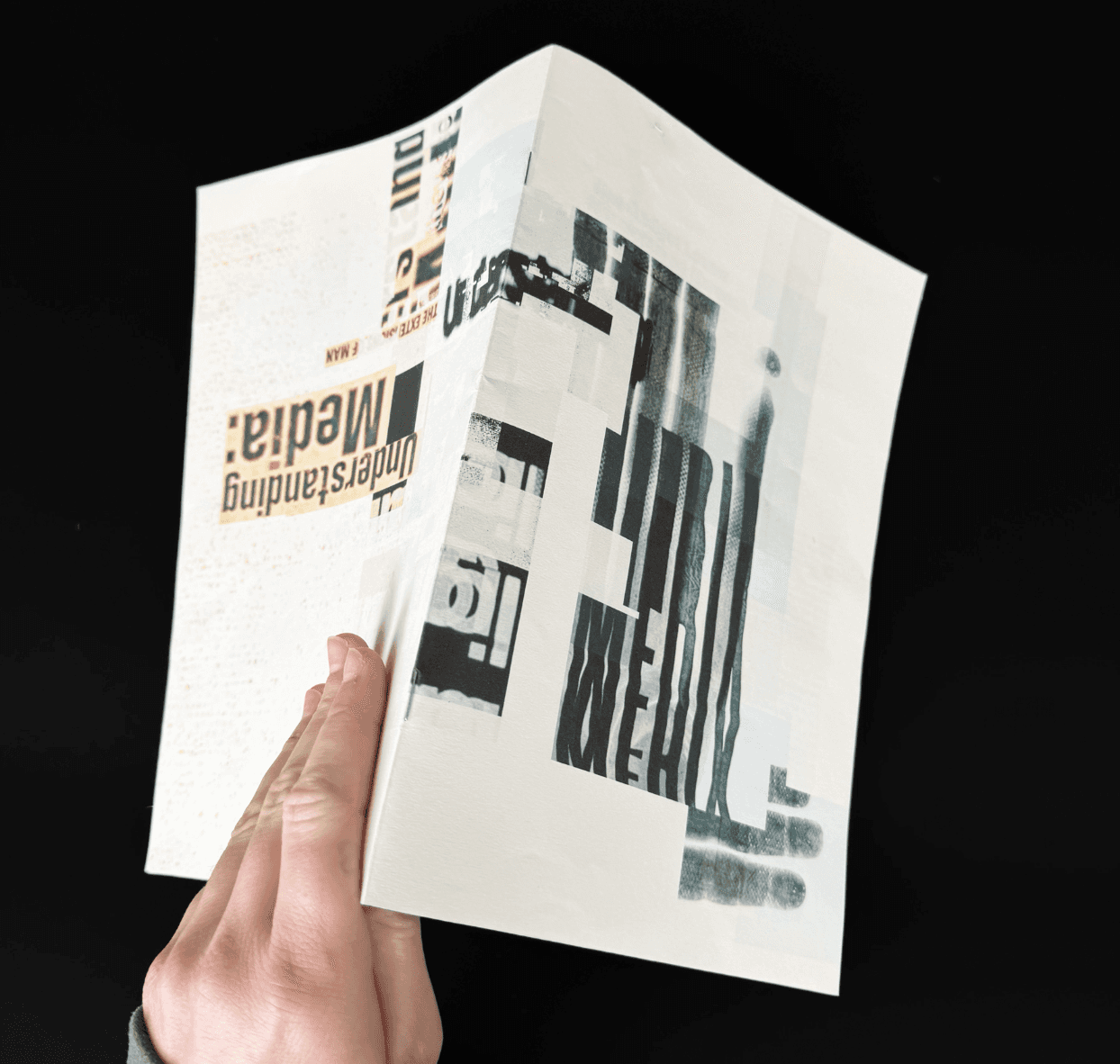
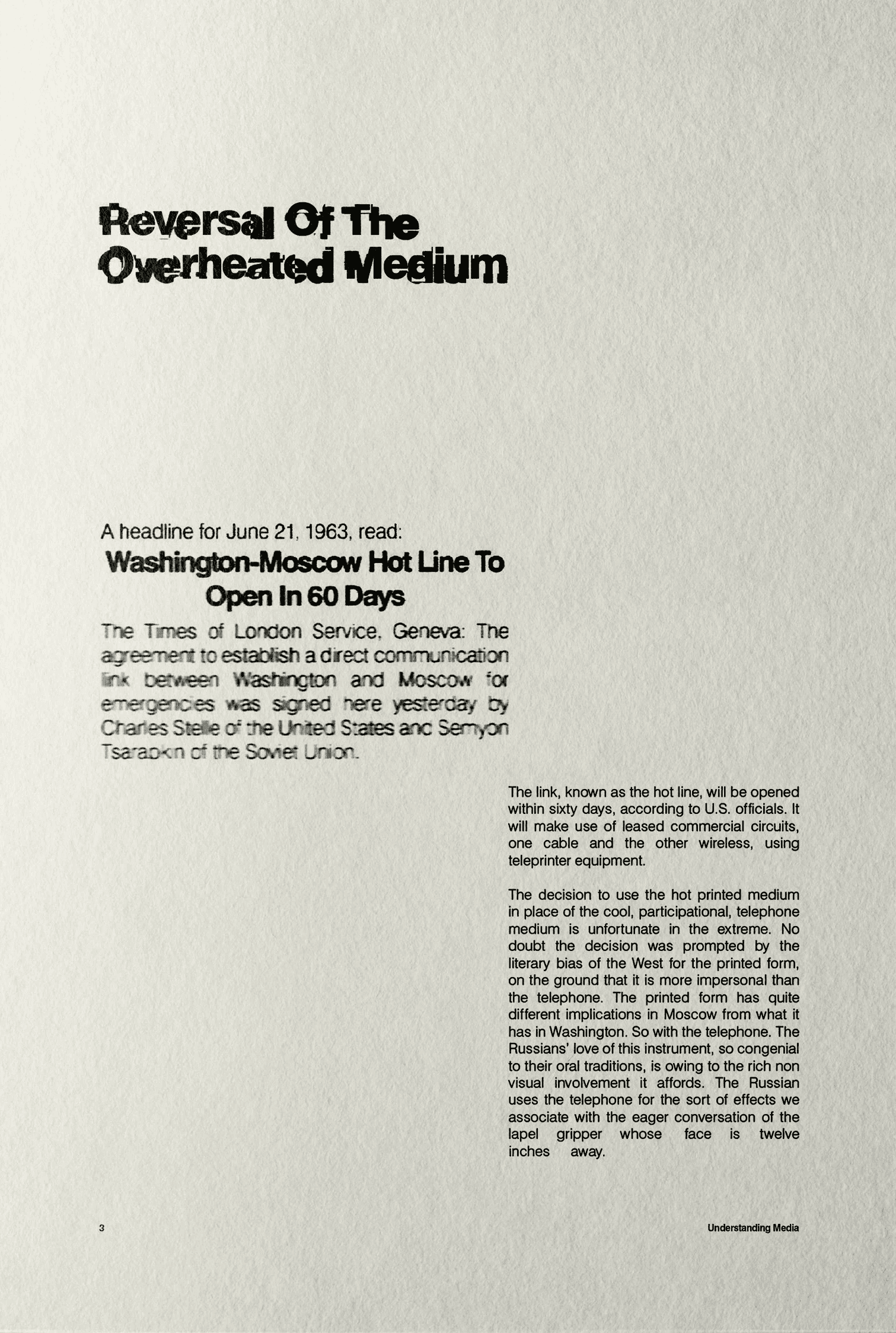
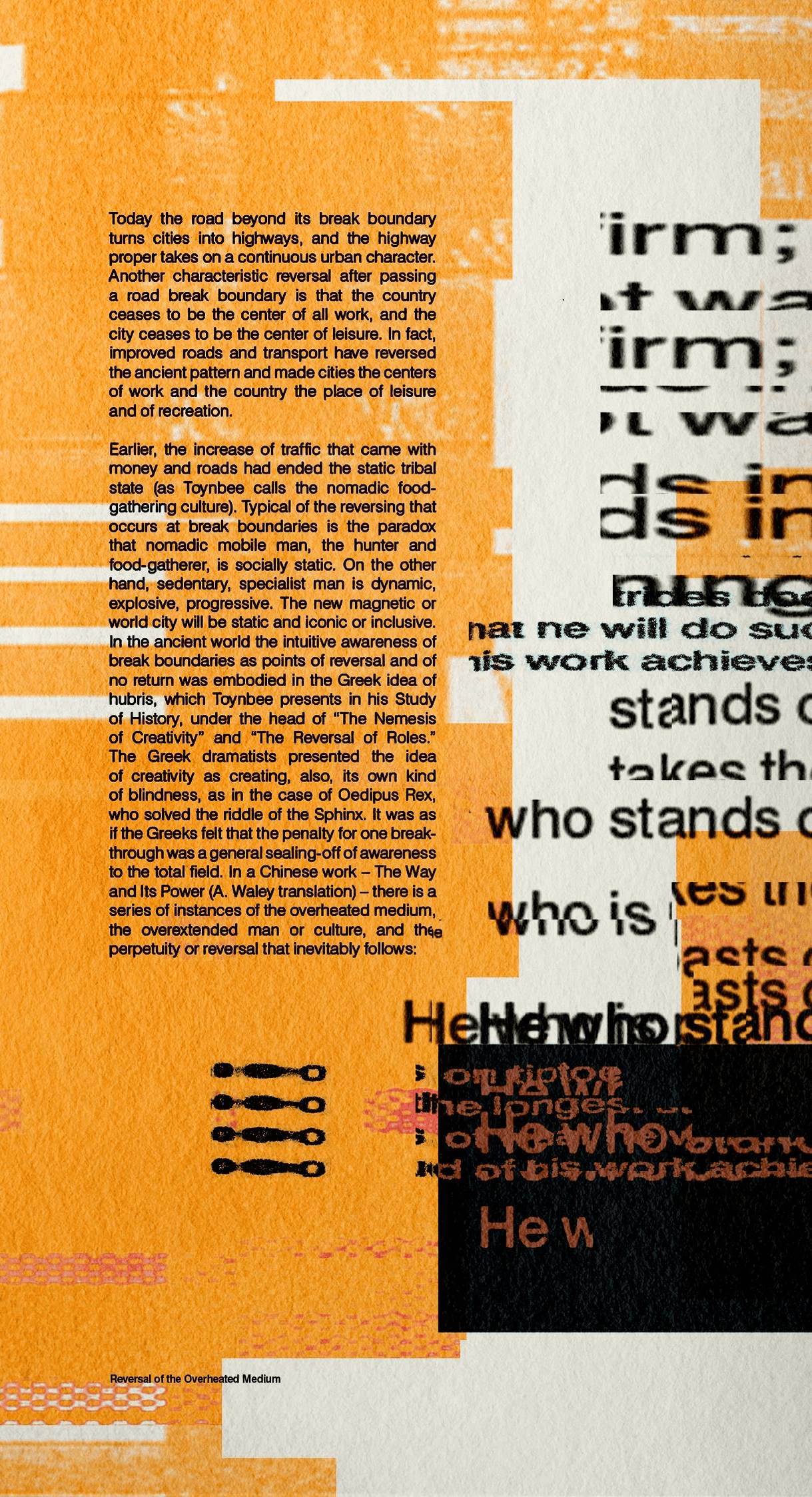
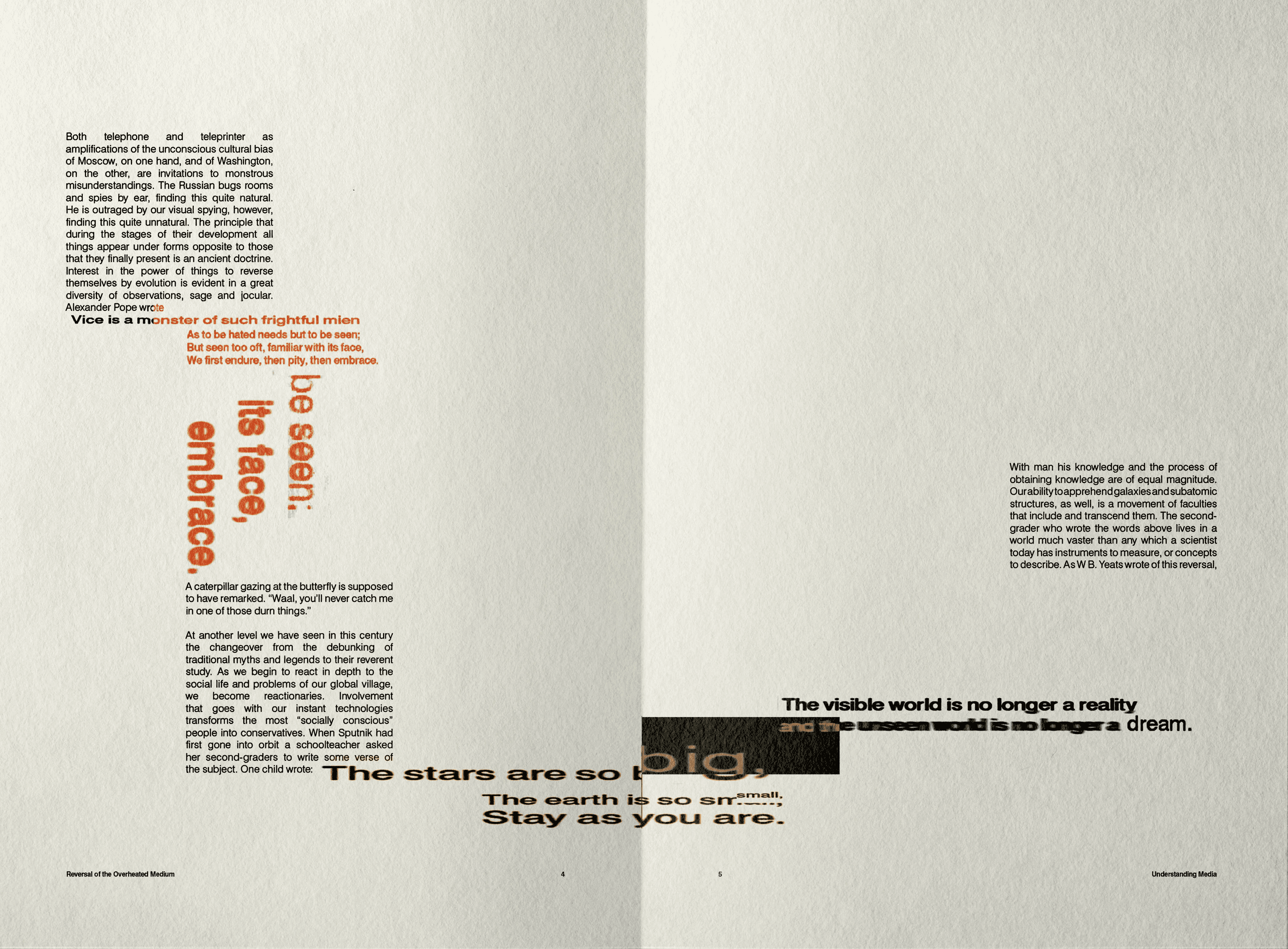
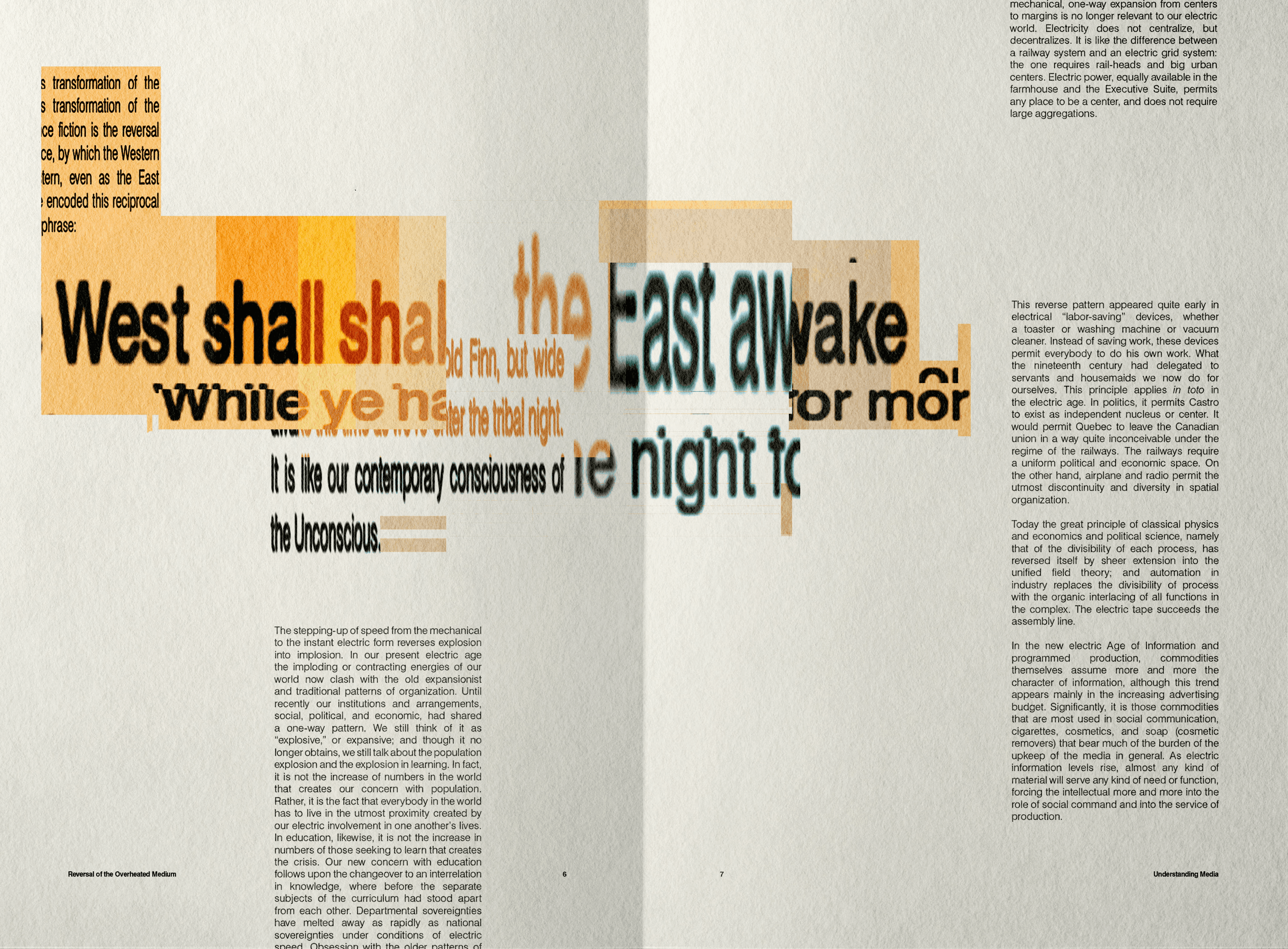
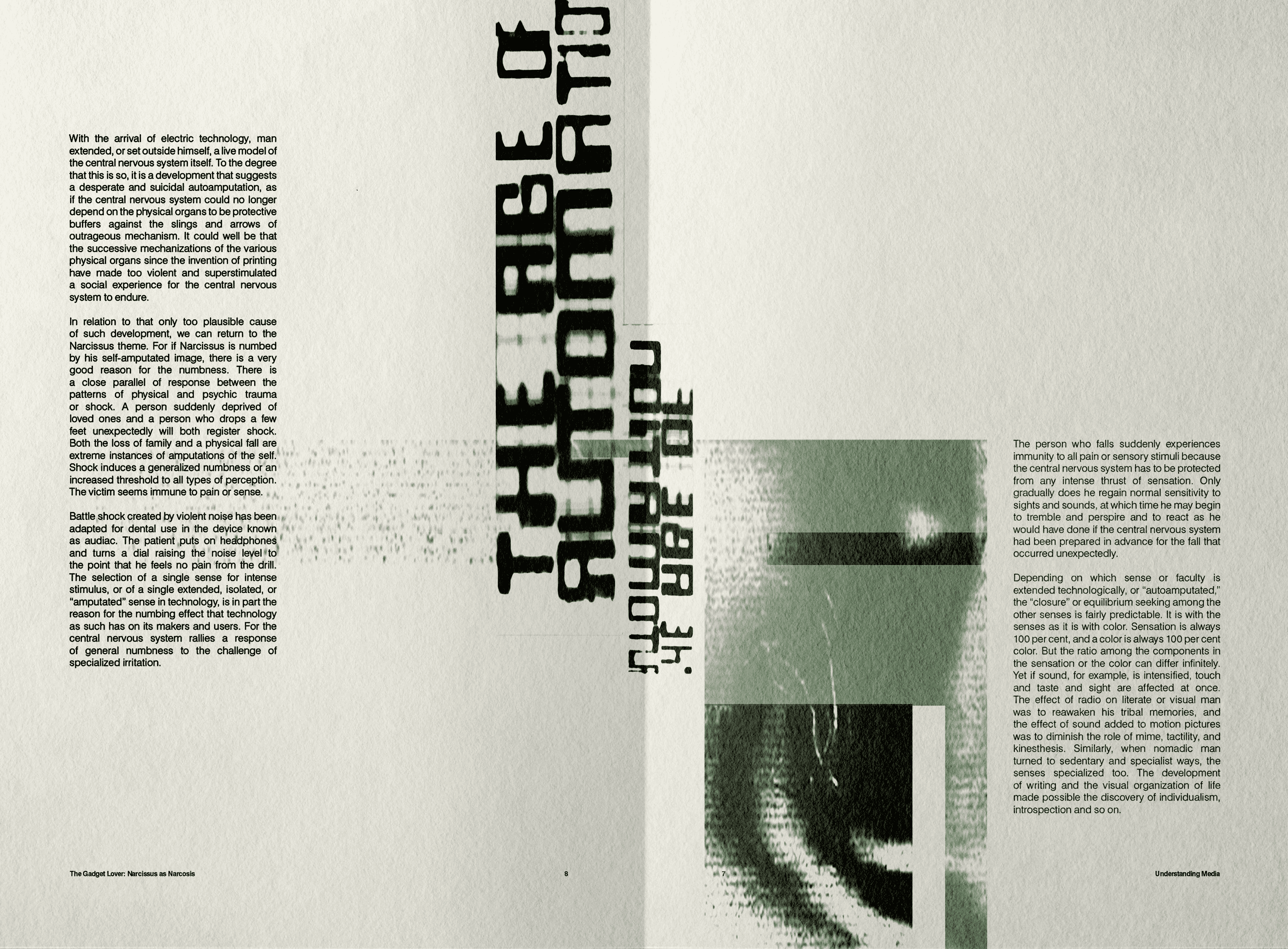
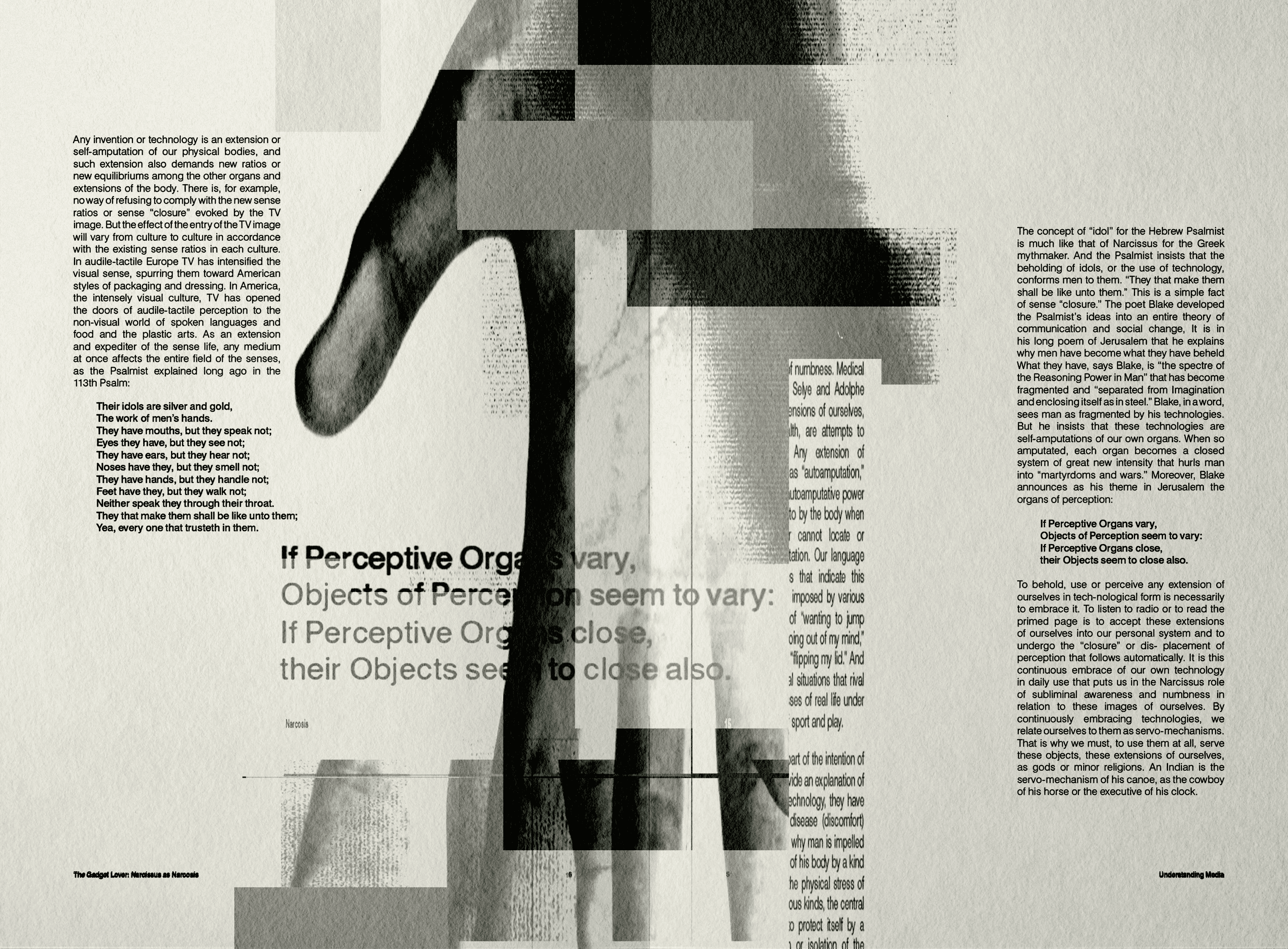
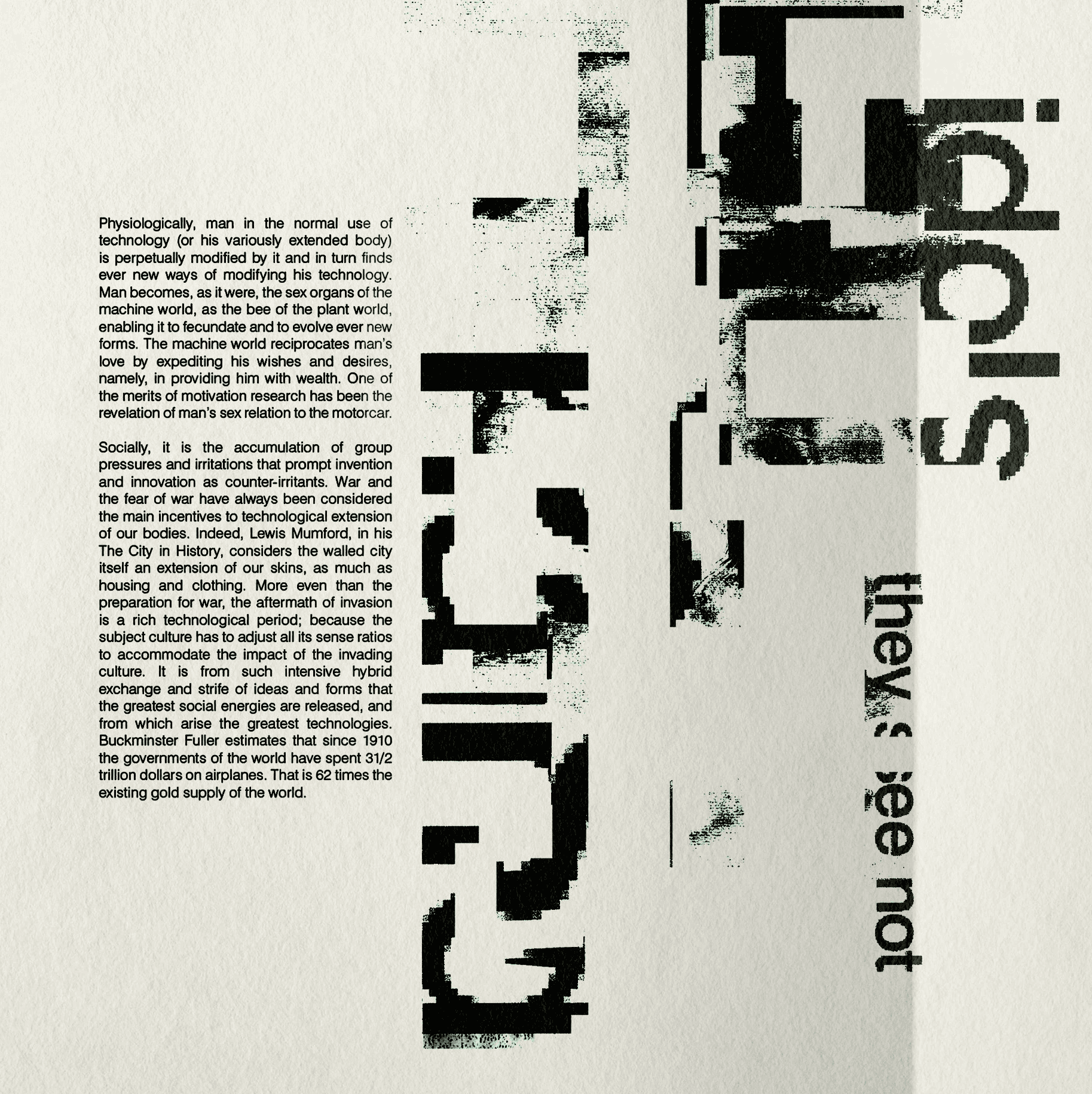
My concept centers on reversing and echoing the structure of The Overheated Medium and The Gadget Lover: Narcissus vs. Narcosis through both form and image making. In the first chapter, I focused on the idea of the “overheated” printed medium, starting with clean, intentional grids that slowly destabilize. As the text becomes overused and overloaded, it warps, distorts, and eventually sabotages its own purpose, echoing McLuhan’s idea that a hot medium collapses under its own intensity. The spreads shift from refined structure into increasingly saturated, dysfunctional representations of the text until the chapter collapses into a full black spread. That’s the hinge point. The book flips, and the second chapter begins from the inverted back side, now cooled down in palette and tone. The Gadget Lover mirrors the rise and fall of media again, but this time the imagery emphasizes our relationship to it as an extension of ourselves. The early spreads show clear connections between media and the body, but as accessibility increases and dependence intensifies, the link becomes tangled and unrecognizable. By the end, the human presence severs from the medium entirely, dissolving the printed form back into nothingness at the final black spread.
Project Details
My concept centers on reversing and echoing the structure of The Overheated Medium and The Gadget Lover: Narcissus vs. Narcosis through both form and image making. In the first chapter, I focused on the idea of the “overheated” printed medium, starting with clean, intentional grids that slowly destabilize. As the text becomes overused and overloaded, it warps, distorts, and eventually sabotages its own purpose, echoing McLuhan’s idea that a hot medium collapses under its own intensity. The spreads shift from refined structure into increasingly saturated, dysfunctional representations of the text until the chapter collapses into a full black spread. That’s the hinge point. The book flips, and the second chapter begins from the inverted back side, now cooled down in palette and tone. The Gadget Lover mirrors the rise and fall of media again, but this time the imagery emphasizes our relationship to it as an extension of ourselves. The early spreads show clear connections between media and the body, but as accessibility increases and dependence intensifies, the link becomes tangled and unrecognizable. By the end, the human presence severs from the medium entirely, dissolving the printed form back into nothingness at the final black spread.
Project Details
My concept centers on reversing and echoing the structure of The Overheated Medium and The Gadget Lover: Narcissus vs. Narcosis through both form and image making. In the first chapter, I focused on the idea of the “overheated” printed medium, starting with clean, intentional grids that slowly destabilize. As the text becomes overused and overloaded, it warps, distorts, and eventually sabotages its own purpose, echoing McLuhan’s idea that a hot medium collapses under its own intensity. The spreads shift from refined structure into increasingly saturated, dysfunctional representations of the text until the chapter collapses into a full black spread. That’s the hinge point. The book flips, and the second chapter begins from the inverted back side, now cooled down in palette and tone. The Gadget Lover mirrors the rise and fall of media again, but this time the imagery emphasizes our relationship to it as an extension of ourselves. The early spreads show clear connections between media and the body, but as accessibility increases and dependence intensifies, the link becomes tangled and unrecognizable. By the end, the human presence severs from the medium entirely, dissolving the printed form back into nothingness at the final black spread.
Process
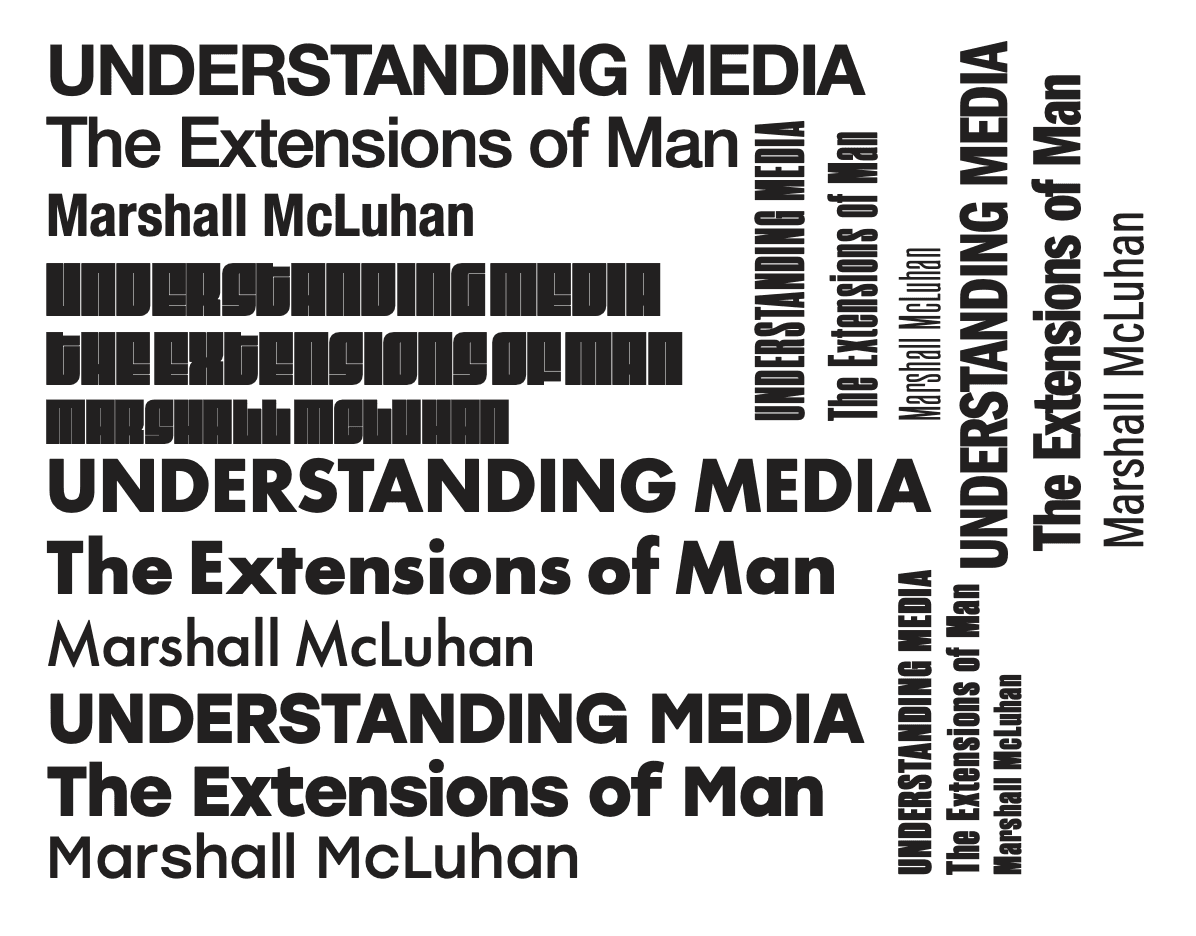
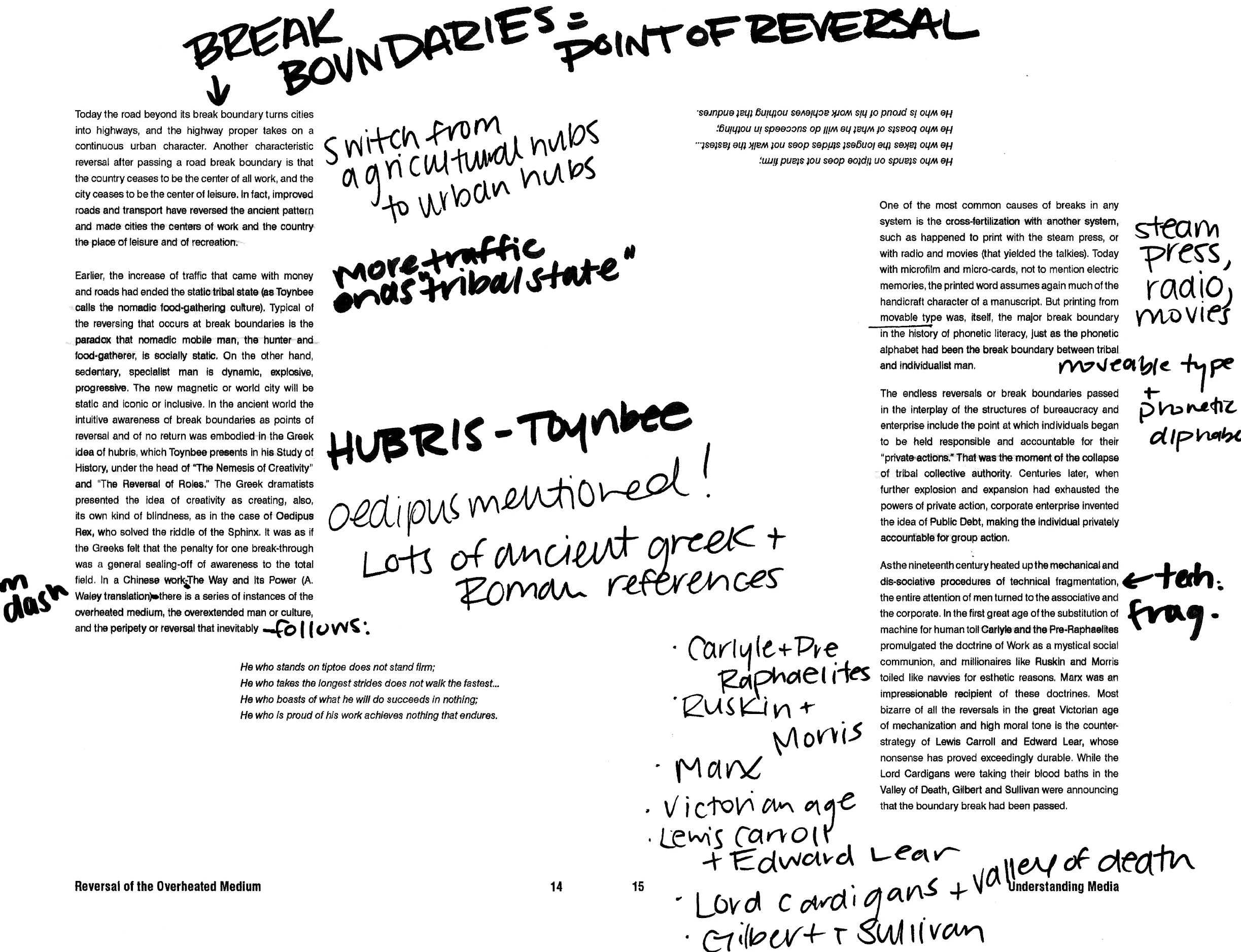
The visual system developed through a lot of experimentation with pixelation, scanning, and image degradation. I worked iteratively, running type and imagery through processes that would gradually break them down, testing different resolutions, photocopy distortions, and digital manipulations to find a balance between legibility and collapse. The final structure of the book design shows a transition from clear and structured to fragmented and abstract. As the pages progress, type begins to warp, dissolve, and lose clarity, mirroring the way media can reshape and obscure its own message.
Process
The visual system developed through a lot of experimentation with pixelation, scanning, and image degradation. I worked iteratively, running type and imagery through processes that would gradually break them down, testing different resolutions, photocopy distortions, and digital manipulations to find a balance between legibility and collapse. The final structure of the book design shows a transition from clear and structured to fragmented and abstract. As the pages progress, type begins to warp, dissolve, and lose clarity, mirroring the way media can reshape and obscure its own message.
Process
The visual system developed through a lot of experimentation with pixelation, scanning, and image degradation. I worked iteratively, running type and imagery through processes that would gradually break them down, testing different resolutions, photocopy distortions, and digital manipulations to find a balance between legibility and collapse. The final structure of the book design shows a transition from clear and structured to fragmented and abstract. As the pages progress, type begins to warp, dissolve, and lose clarity, mirroring the way media can reshape and obscure its own message.